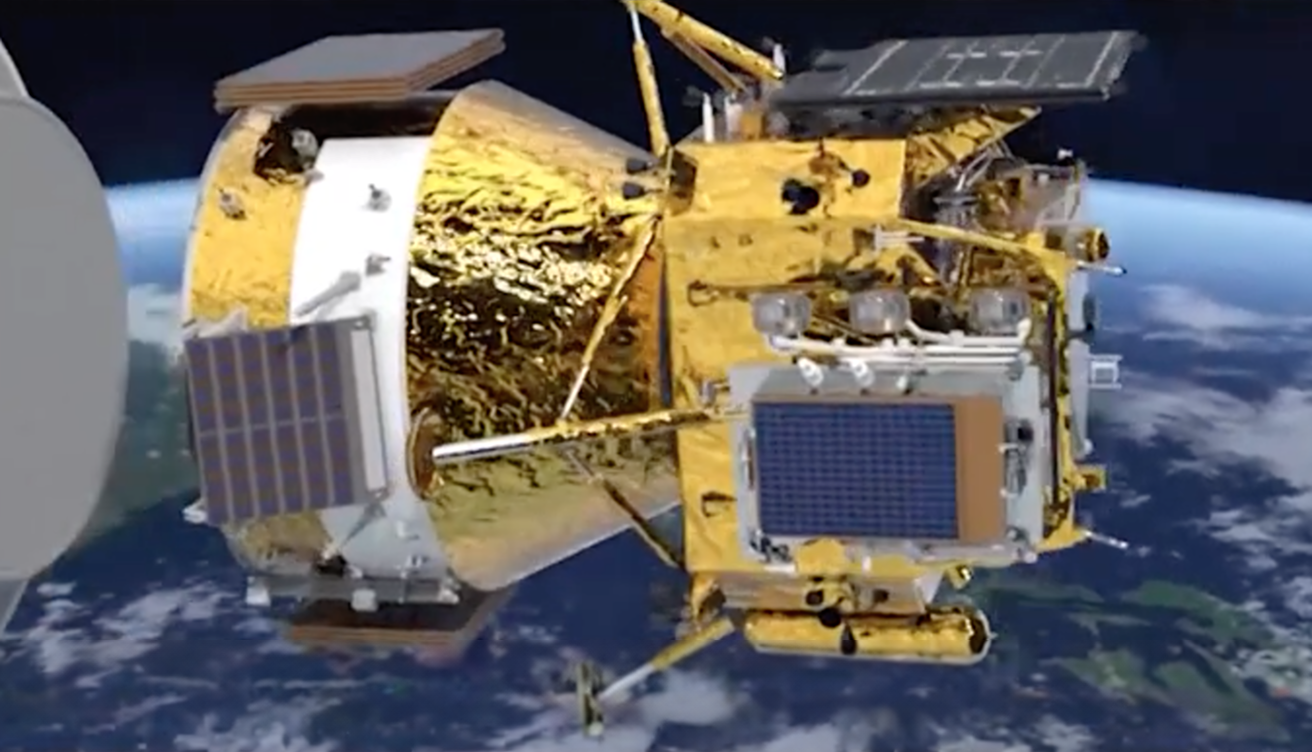
China's National Space Administration has postponed the Chang'e-7 lunar mission, pushing the spacecraft past its originally targeted late-August launch window. The decision comes from both CNSA and the China Manned Space Engineering Office, marking another reminder that executing complex space operations demands precision and unforgiving timelines.
Chang'e-7 represents a critical phase in China's robotic lunar exploration architecture. The mission builds directly on the success of Chang'e-6, which returned 1,935 grams of lunar samples from the moon's far side in June 2024. Where Chang'e-6 focused on sample collection, Chang'e-7 shifts toward sustained lunar presence and resource investigation.
The Chang'e-7 spacecraft comprises multiple components designed for comprehensive lunar reconnaissance. The mission includes an orbiter, a lander, and a rover that will investigate the Moon's south polar region, specifically targeting the Aitken Basin and nearby areas. This region holds particular scientific value because permanently shadowed craters there may contain water ice and other volatiles essential for future human missions and in-situ resource utilization.
CNSA provided minimal detail about the postponement's cause in its announcement, a typical posture for the Chinese space program. Technical challenges during pre-launch testing, payload integration issues, or weather-related constraints could explain the delay. Space agencies routinely slip missions by days or weeks when launch readiness falls short of operational standards. The cost of rushing to a deadline and experiencing a failure vastly exceeds the modest setback of missing an initial launch window.
Chang'e-7 follows the naming convention of China's lunar program, honoring the Chinese moon goddess. The previous Chang'e-6 mission demonstrated China's technological maturity in far-side operations, having successfully executed a complex autonomous rendezvous and docking in lunar orbit before returning samples. Chang'e-7 builds on this proven methodology while introducing new scientific instruments and expanded rover capabilities.
The south polar region represents contested real estate in lunar exploration. NASA's Artemis program targets the same area for human landings, and international interest in polar water ice has intensified across multiple space agencies. The Artemis program itself has experienced delays, with lunar landing timelines pushed back repeatedly. Chang'e-7's investigation of this region will provide valuable data on terrain hazards, resource distribution, and environmental conditions that inform planning for both Chinese and international missions.
China's lunar exploration roadmap explicitly aims toward sustained robotic presence before human missions commence. Chang'e-7 fits within this progression, advancing capabilities in polar operations, autonomous systems, and payload deployment. The mission's success will validate technologies needed for Chang'e-8, the next-generation mission planned for 2026-2027, which will establish a preliminary research station on the lunar surface.
The postponement reflects the reality that spaceflight tolerates no shortcuts. Every component, every system, every procedure requires verification before launch. CNSA will announce a revised launch date once all technical checkpoints receive clearance. When Chang'e-7 eventually reaches orbit, it will add Chinese capabilities to humanity's collective understanding of the Moon's polar regions, information that shapes the future architecture for lunar exploration and resource development.