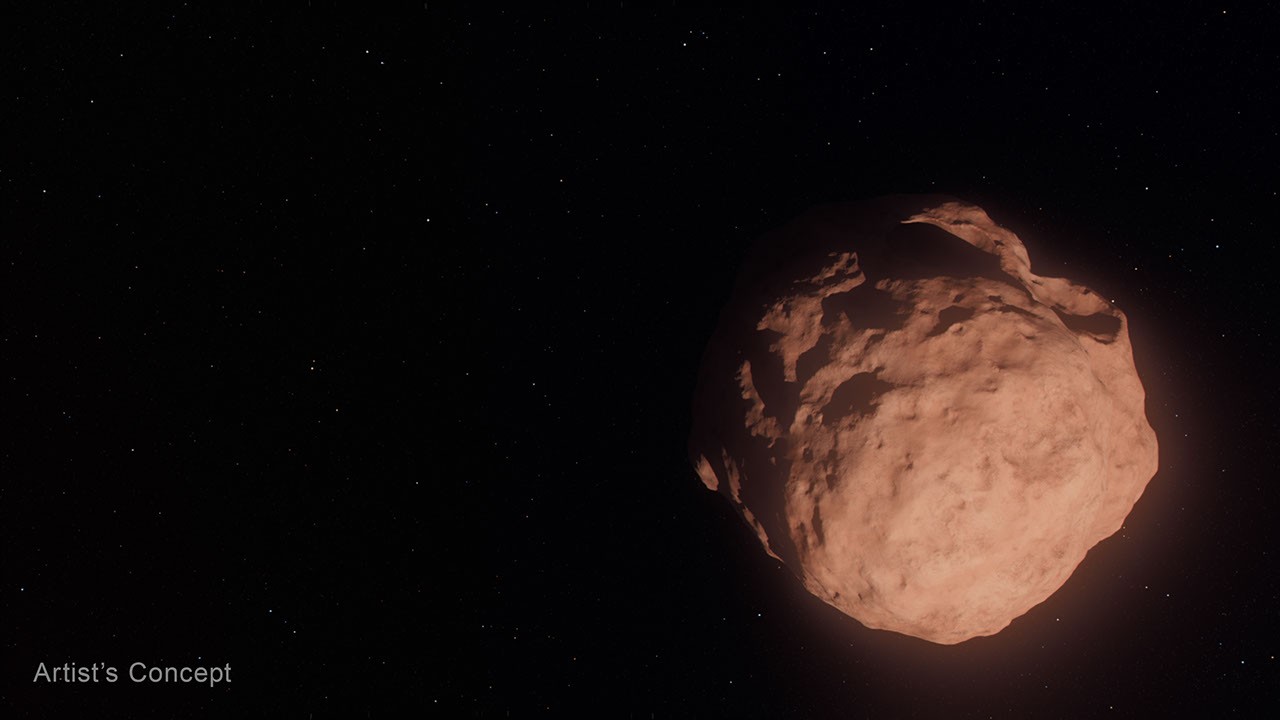
NASA's Hubble and James Webb Space Telescopes have jointly observed Trans-Neptunian Objects (TNOs) for the first time, revealing an unexpected deficit of small bodies in the distant solar system. The discovery challenges current models of planetary formation and hints at violent gravitational reshuffling that left permanent scars on the solar system's architecture.
Trans-Neptunian Objects orbit beyond Neptune's path, roughly 30 to 100 astronomical units from the sun. They inhabit the Kuiper Belt and scattered disk, regions populated by icy remnants from the solar system's formation 4.6 billion years ago. Pluto, Eris, Makemake, and Haumea rank among the largest TNOs, but the vast majority remain small and difficult to detect. Until now, ground-based surveys could only study the brightest TNOs. Hubble and Webb together overcame this barrier.
The joint observational campaign detected some of the smallest and faintest TNOs ever directly imaged. The collaboration exploited each telescope's unique strengths. Hubble's high resolution pinpointed faint objects against stellar backgrounds. Webb's infrared sensitivity captured thermal signatures from bodies too dim for visible-light telescopes. Combined, they revealed a population structure that contradicts existing predictions.
Researchers expected to find a certain abundance of small TNOs relative to large ones, based on models of planet formation and collisional grinding over billions of years. Instead, the TNO population showed a deficit of small objects. The team found fewer small bodies than theory predicted, with the shortage most pronounced below a certain size threshold.
This discrepancy points to past dynamical upheaval. Early in solar system history, the Nice model and similar scenarios describe a period when giant planets migrated from their birth locations, scattering smaller bodies across vast distances. This "grand tack" reorganized the system, gravitationally ejecting countless planetesimals into interstellar space and crushing others into fragments. The survivors who remain as TNOs today represent a heavily pruned population.
The missing small TNOs likely fell victim to this gravitational chaos. Planets stirred up orbits, increased collision velocities, and fragmented small bodies into dust. Alternatively, dynamical processes may have ejected smaller objects preferentially, leaving behind a skewed size distribution. Whatever the mechanism, the TNO population retains a memory of those ancient catastrophes.
This finding reshapes understanding of solar system evolution and planetary migration. The Nice model and its variants now face constraints from direct observation of Kuiper Belt demographics. The deficit of small TNOs provides a fossil record etched by gravitational violence. Models must now account for this observed size distribution to remain credible.
The collaboration between Hubble and Webb demonstrates how complementary observations unlock discoveries inaccessible to either telescope alone. Hubble launched in 1990 and continues to operate after multiple servicing missions. Webb, deployed in 2022, represents humanity's most advanced infrared observatory. Their joint campaign on TNOs signals a new era of synergistic space astronomy.
Future surveys may expand this census, mapping TNO populations across different orbital regions and refining estimates of the total number of distant solar system bodies. Each new detection and measurement inches closer to complete knowledge of how violent processes in the young solar system persisted into the present.