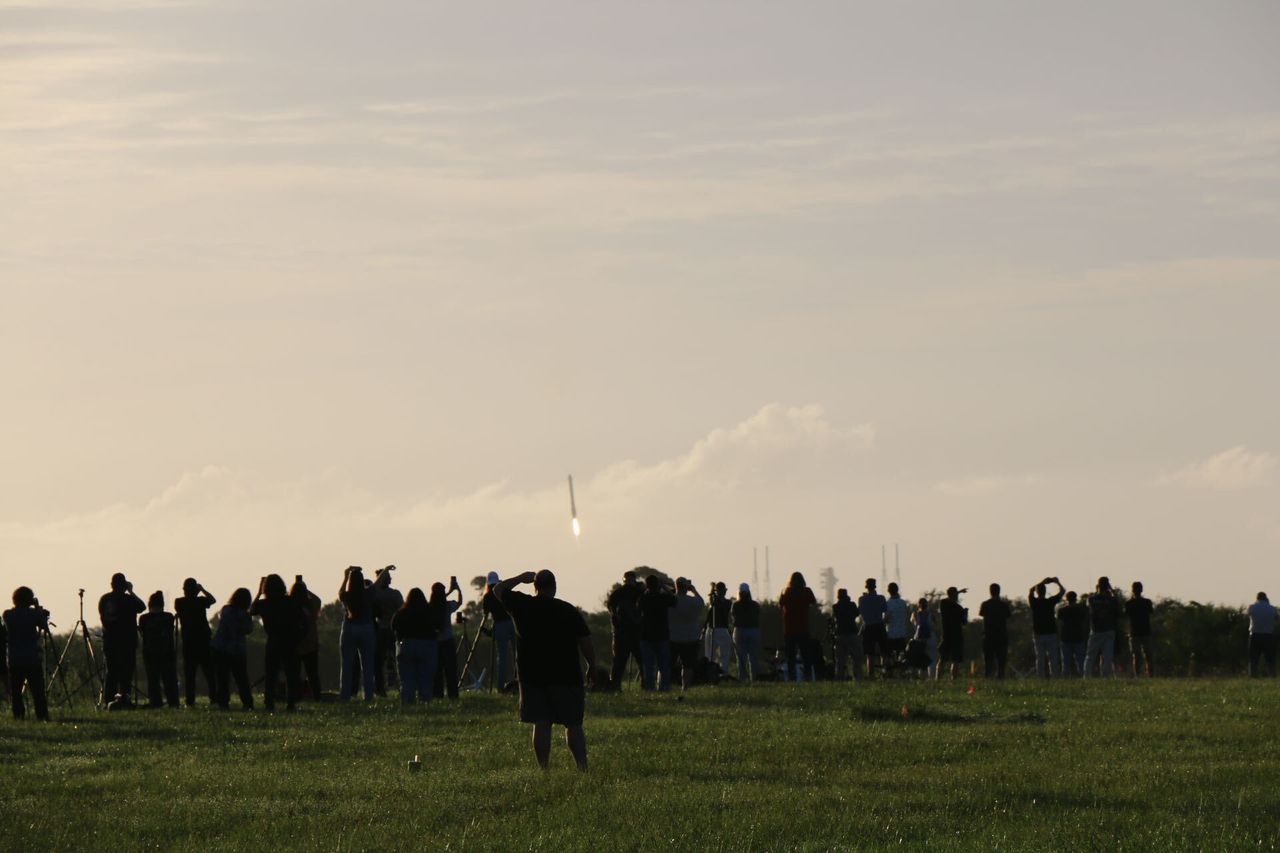
SpaceX's Falcon Heavy rocket successfully delivered NASA's Nancy Grace Roman Space Telescope to orbit on August 30, 2026, marking a watershed moment for both the agency's astrophysics program and commercial spaceflight reliability. The mission demonstrated the operational maturity of SpaceX's heaviest lift vehicle, capable of propelling the Roman telescope on its journey to a solar orbit roughly one million kilometers from Earth.
The Roman Space Telescope represents NASA's next generation of space-based astronomy following the James Webb Space Telescope. Named after Nancy Grace Roman, the pioneering NASA astrophysicist who shaped modern observational cosmology, the mission will conduct wide-field imaging and spectroscopy across ultraviolet, visible, and near-infrared wavelengths. The telescope carries a mirror roughly 2.4 meters in diameter and will hunt for exoplanets, map dark matter distribution across cosmic structures, and observe supernovae and other transient phenomena with unprecedented survey speed.
Falcon Heavy's three-core architecture proved essential for this mission. The vehicle's dual side boosters and central core combine to generate 5.1 meganewtons of thrust at liftoff, providing the payload capacity necessary to send the Roman telescope to its destination orbit with adequate margin. SpaceX designed Falcon Heavy specifically to handle national security launches and deep-space missions that exceed the capabilities of the single-core Falcon 9.
The launch sequence showcased SpaceX's proven booster recovery operations. Within minutes of stage separation, the two side boosters executed autonomous guidance systems and decelerated through the upper atmosphere. They performed grid-fin steering adjustments to counteract atmospheric drag and landing leg deployment before touching down at designated recovery zones. This capability, refined across dozens of Falcon 9 and Falcon Heavy flights, eliminates the loss of approximately $62 million per booster and accelerates reusability timelines.
Falcon Heavy's central core performed its own powered descent, though recovery success rates for this stage remain lower than side boosters due to higher velocity requirements and greater structural stress. The mission profile for Roman allowed planners to optimize for booster recovery while still achieving the necessary orbital insertion.
NASA selected Falcon Heavy for the Roman launch through the agency's Launch Services Program, which evaluates competing commercial providers and government options for each mission. The selection reflected confidence in SpaceX's ability to deliver both the necessary performance characteristics and the safety margins demanded for this flagship science asset. Roman carries instruments designed to operate for at least six years, with consumables and systems engineered for potential extended operation to a decade or beyond.
The Roman Space Telescope joins a growing constellation of space observatories, including the still-operating James Webb Space Telescope, the Hubble Space Telescope, and specialized X-ray missions. Its wide-field survey capabilities will complement JWST's deep-field observations, enabling astronomers to identify interesting objects for follow-up study with other facilities.
SpaceX's booster recovery operations continue to reduce launch costs across the commercial space industry, creating downward pressure on mission expenses. This efficiency gains ripple through government budgets and enable more frequent scientific missions. The Roman launch exemplifies how rocket reusability, once theoretical, now powers routine access to deep space.