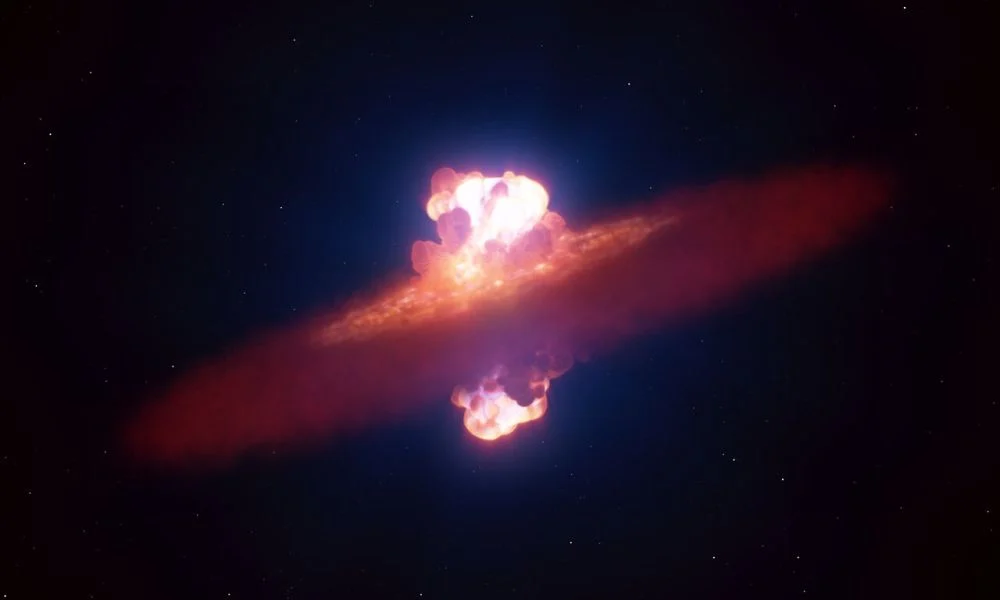
Astronomers have compiled the largest catalog of Type Ia supernovae to date, cataloging nearly 3,000 exploding white dwarf stars. This unprecedented dataset challenges existing theoretical models of dark energy, the invisible force responsible for the universe's accelerating expansion.
Type Ia supernovae occur when white dwarfs, the dense remnants of dead stars, accumulate material from companion stars until thermonuclear runaway triggers a catastrophic explosion. These events serve as cosmic distance markers, or "standard candles," because their uniform brightness allows astronomers to calculate distances across billions of light-years. This methodology earned the 2011 Nobel Prize in Physics and enabled the 1998 discovery that dark energy drives cosmic acceleration.
The new catalog represents a systematic compilation of observations from ground-based telescopes and space missions, including data from the Hubble Space Telescope and various surveys conducted over decades. Researchers cross-referenced and standardized measurements across thousands of supernovae discovered at different epochs and by different instruments, creating the most robust dataset for studying these cosmic explosions.
The findings challenge current dark energy models in several ways. If dark energy behaves as theory predicts, the brightness and distribution patterns of Type Ia supernovae should match specific predictions. Preliminary analysis of the expanded dataset reveals deviations from expected values. Some supernovae appear dimmer or brighter than the standard candle model suggests, indicating either that some events deviate from the classical Type Ia mechanism or that our understanding of dark energy requires refinement.
Researchers identified additional complexity in how these explosions occur. Not all Type Ia supernovae follow identical progenitor paths. Some involve accretion from normal companion stars, while others may result from merging white dwarf binary systems. These different pathways could produce slightly different explosion energies and brightnesses, complicating their use as standardized distance indicators.
The catalog also reveals intriguing patterns in supernova rates across different galaxy types and cosmic epochs. By analyzing how frequently supernovae occurred at various times in the universe's history, astronomers gain insight into the star formation history and evolution of galaxies themselves. This temporal distribution provides an independent check on whether dark energy's strength remains constant or varies with cosmic time, a question central to understanding the universe's ultimate fate.
Dark energy constitutes roughly 68 percent of the universe's energy density, yet physicists remain uncertain whether it represents a cosmological constant, as Einstein's equations suggest, or a dynamic field that evolves. Type Ia supernovae provide one of the few direct observational probes of this mysterious phenomenon. A more precise understanding of these explosions and their intrinsic brightness variations enables tighter constraints on dark energy's properties.
The research team plans to continue refining the catalog as new observations arrive from surveys like the Vera Rubin Observatory's Legacy Survey of Space and Time. Future space telescopes and ground-based facilities will detect even more distant supernovae, extending the cosmic distance ladder deeper into the universe's past. This expanding dataset will test dark energy models with unprecedented precision and potentially reveal whether physicists must expand current theoretical frameworks or adopt entirely new physics to explain cosmic acceleration.