# The Next Wave of Mars Exploration Takes Shape Globally
Mars exploration enters a new phase as space agencies worldwide advance ambitious plans to deploy rovers, orbital missions, and unprecedented sample collection operations. These efforts represent a coordinated push to understand Martian geology, search for signs of past microbial life, and establish the foundation for eventual human exploration.
Multiple nations have committed significant resources to Mars investigations. China's Zhurong rover continues its work on the Utopian Planitia, while the country plans additional orbiters and landers for the coming decade. The European Space Agency and Roscosmos jointly developed the Rosalind Franklin rover, part of the ExoMars program, designed to drill deeper into Martian subsurface where radiation damage is minimal and conditions may have preserved organic compounds. NASA's Perseverance rover collects rock samples on the crater floor of Jezero, preparing them for eventual retrieval by an international sample return campaign.
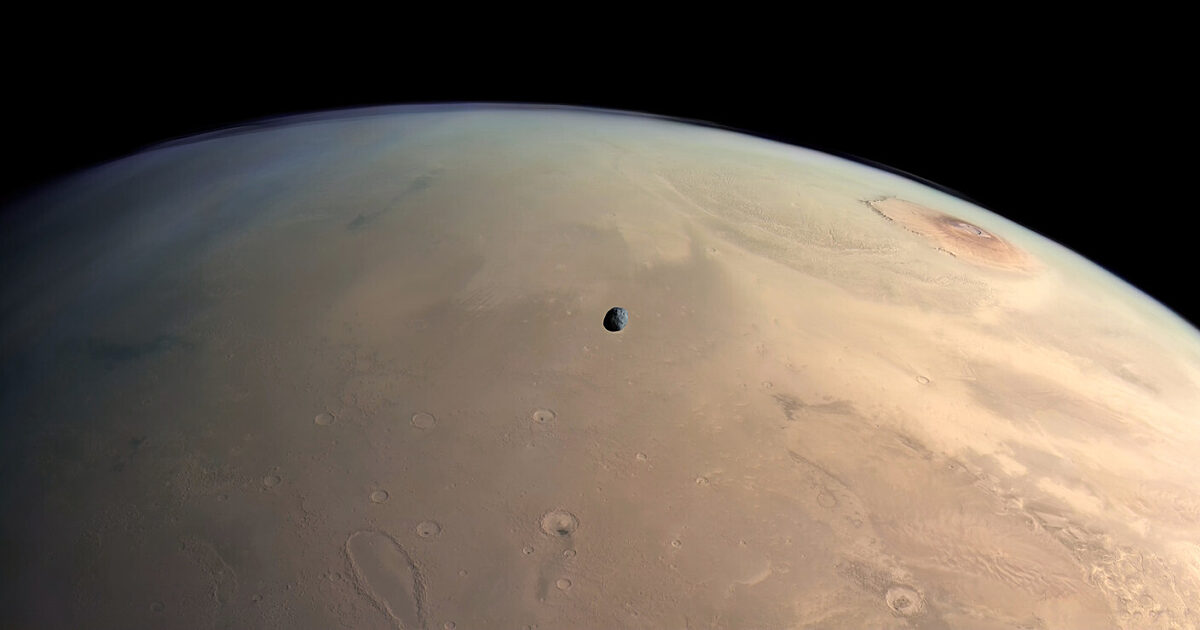
The most technically complex undertaking involves returning samples from Phobos, Mars' smaller moon. Japan's Martian Moons eXploration (MMX) mission targets Phobos specifically, planning to land on the moon's surface, collect pristine geological material, and return it to Earth. This operation requires autonomous landing, sample acquisition in low gravity, and ascent back to an orbiting spacecraft. Scientists believe Phobos material may contain evidence of Martian origin, potentially offering insights into the red planet's formation and early conditions.
These missions build on decades of reconnaissance work. Orbital imagery from NASA's Mars Reconnaissance Orbiter, the European Trace Gas Orbiter, and India's Mars Orbiter Mission have mapped potential landing sites, identified subsurface ice deposits, and catalogued atmospheric composition. Ground-based rovers from NASA, China, and the European-Russian partnership gather in-situ data about soil chemistry, temperature variations, and radiation levels.
The scientific rationale centers on three core questions. First, the habitability question: did Mars ever possess conditions where liquid water, organic molecules, and energy sources coexisted for sustained periods. Second, the life question: did microbial life emerge during Mars' warmer, wetter past, and if so, did it leave detectable biosignatures in the geological record. Third, the comparative planetology question: how did two terrestrial worlds, initially similar in size and composition, diverge so dramatically in habitability and atmosphere retention.
Sample return technology represents the field's next frontier. Perseverance's cached samples require retrieval by a future NASA-led mission involving a Mars Sample Return Orbiter and Fetch Rover. This multi-mission architecture demands precision landing, autonomous drilling and collection, and planetary protection protocols to prevent backward contamination of Earth and forward contamination of Mars.
International cooperation accelerates these timelines. Nations share orbital data, coordinate landing site selection to prevent redundancy, and sometimes pool resources for joint missions. The ExoMars program exemplifies this partnership, uniting European and Russian expertise despite geopolitical tensions.
These converging missions establish Mars as the primary focus of planetary science for the next decade. Each rover, each orbiter, each sample return operation adds layers to our understanding of whether Mars harbored life and what conditions shaped the planet into its present state.