# A Fresh Lunar Scar Reveals the Moon's Violent Present
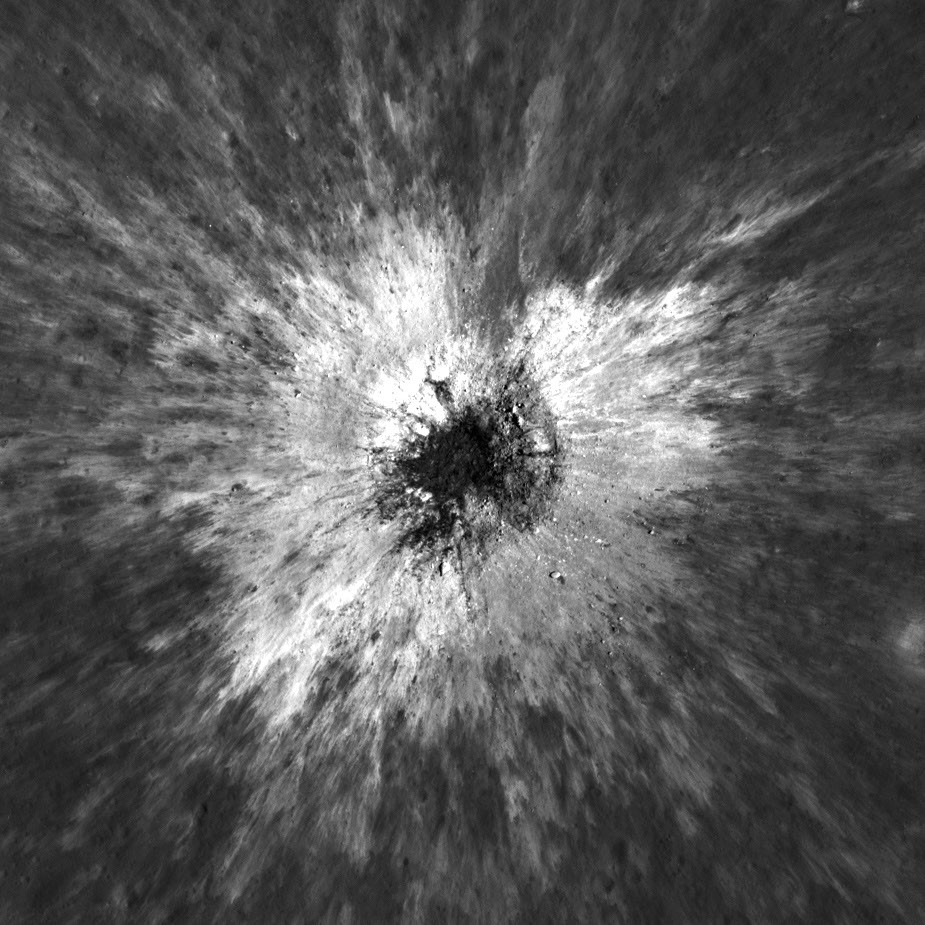
NASA's Astronomy Picture of the Day featured McGetchin crater on September 23, 2026, a newly formed impact feature on the lunar surface. The crater's discovery underscores a reality that lunar scientists have long recognized: the Moon remains geologically active, bombarded by meteorites that continuously reshape its terrain.
McGetchin crater joins a catalog of fresh lunar impacts detected over the past two decades through high-resolution imaging from lunar orbiters. The Moon receives roughly 100 kilograms of material every single day from space. While Earth's atmosphere burns up most small meteorites as shooting stars, the airless Moon bears the full force of each collision, creating new craters that persist for billions of years without weathering or erosion.
The identification of fresh craters serves multiple scientific purposes. Each new impact offers planetary scientists a natural laboratory to study impact mechanics, regolith composition, and subsurface geology. Fresh craters eject pristine material from depth, exposing layers that spacecraft instruments can examine. This process has proven invaluable for understanding the Moon's interior structure and the composition of ancient volcanic deposits.
Lunar crater cataloging accelerated dramatically after NASA's Lunar Reconnaissance Orbiter launched in 2009. The LRO's high-resolution cameras can detect impacts as small as a few meters across, and the spacecraft has monitored the lunar surface for nearly two decades. Researchers have identified hundreds of new craters by comparing images taken years apart, revealing impact rates that match predictions from meteoroid flux models.
McGetchin crater itself likely formed from an asteroid or large meteoroid striking the Moon's surface at hypersonic speeds, traveling faster than 20 kilometers per second. The impact released kinetic energy equivalent to tens or hundreds of tons of TNT, vaporizing rock and creating shock waves that radiated through the lunar crust.
The study of fresh craters informs human exploration plans. NASA's Artemis program aims to return humans to the Moon starting in the mid-2020s, with sustained missions that will eventually establish a long-term presence. Understanding current impact rates helps engineers design habitats that can withstand micrometeorite strikes and plan safe landing sites away from regions prone to recent impacts.
Fresh craters also serve as time markers for lunar geologists. By counting craters of different ages across different regions, researchers can establish a relative chronology of the Moon's geological history. Areas with numerous young craters erupted volcanically more recently than regions with few fresh features. This crater-based dating system, calibrated by radiometric analysis of samples returned by Apollo missions, provides the framework for understanding lunar evolution over 4.5 billion years.
The APOD feature highlighted McGetchin crater's visual characteristics. New craters display bright ejecta blankets, rays of lighter material sprayed outward from the impact site. These bright features fade over time as solar radiation darkens exposed regolith, so crater brightness indicates relative age. McGetchin's prominent rays confirm its youth in geological terms, placing its formation within recent decades or centuries.
Continued monitoring of lunar impacts through space-based telescopes and orbiters will refine impact statistics and reveal temporal patterns in meteoroid delivery. Such observations strengthen the foundation for sustainable lunar exploration and deepen our comprehension of solar system dynamics.