Earth's biosphere took roughly four billion years to evolve from single-celled organisms to complex multicellular life. That timeline, astronomers now recognize, may not apply universally to planets orbiting distant stars. A new paper in the International Journal of Astrobiology suggests that older exoplanets might still harbor only microbial life, not the complex ecosystems we might expect from their age alone.
Dr. Christopher Doughty of Northern Arizona University proposes that a planet's total available carbon determines the pace and complexity of biological evolution. This metric, he argues, offers a better predictor of life's advancement than planetary age alone. The implication reshapes how astrobiologists should prioritize their search strategies across thousands of known exoplanets.
Earth's evolutionary history illustrates the principle. Our planet spent the first three billion years of its existence dominated by microbes. Only within the last billion years did multicellular organisms appear. The Great Oxidation Event, occurring roughly 2.4 billion years ago, fundamentally transformed Earth's atmosphere and enabled more complex life forms to emerge. That transformation required biological systems to accumulate and concentrate carbon through photosynthesis, respiration, and decay cycles.
Not all exoplanets possess equivalent carbon budgets. A rocky world orbiting its star at the habitable zone distance might have far less accessible carbon locked in rocks, atmosphere, and soil than Earth does. Such a planet could host microbial ecosystems for billions of years without ever producing the biochemical complexity necessary for multicellular life. Conversely, a carbon-rich world might progress from microbes to forests and fauna in comparatively rapid geological time.
Doughty's framework addresses a persistent challenge in exoplanet science. With more than 5,500 confirmed exoplanets now catalogued, astronomers must make strategic choices about which worlds merit detailed spectroscopic observation. The James Webb Space Telescope and future instruments like the Extremely Large Telescope represent extraordinary investments. They cannot examine every potentially habitable world. Knowing whether a planet's carbon availability supports only microbes or complex biospheres helps observatories allocate finite observation time effectively.
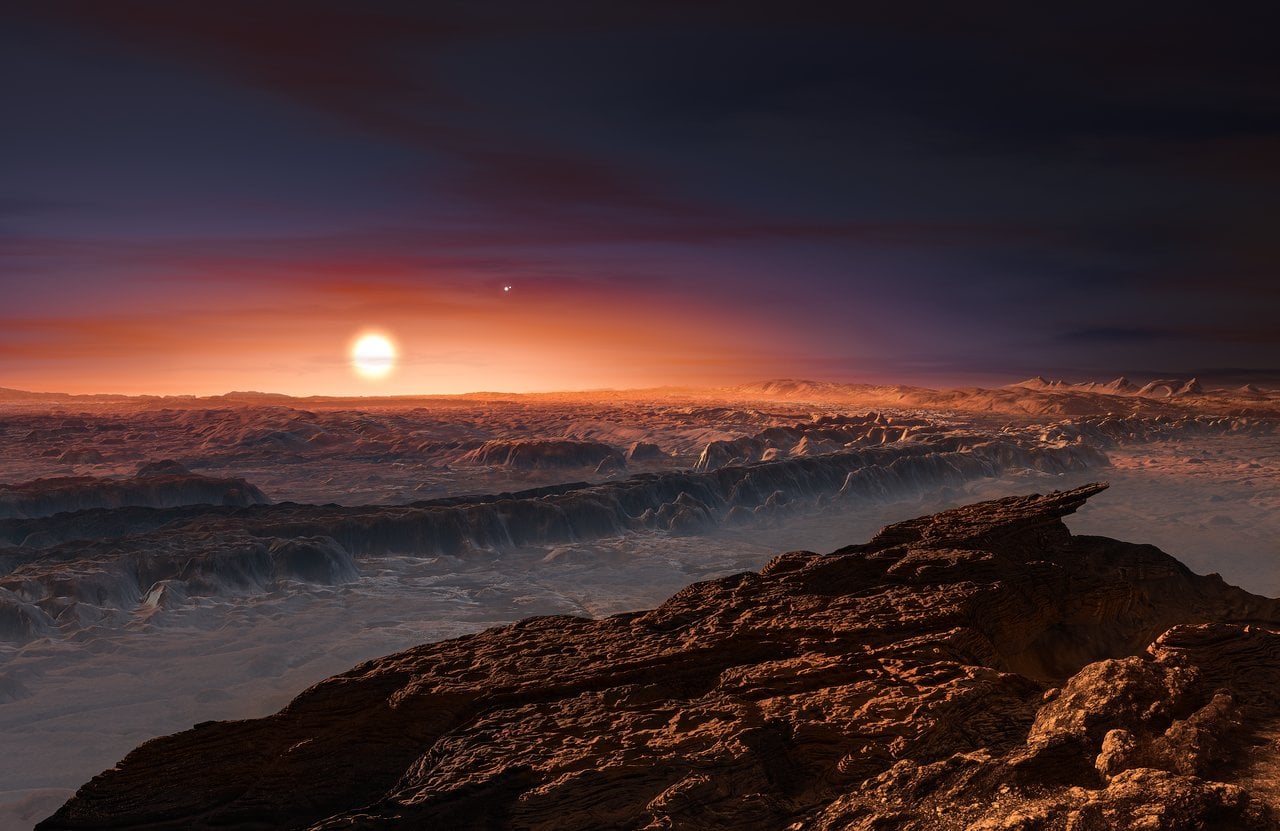
The debate over target selection intensifies as detection capabilities improve. Earlier strategies favored planets orbiting red dwarf stars, which comprise roughly 70 percent of all stars in the Milky Way. Proxima Centauri b, orbiting the nearest star to our sun, became a favorite candidate. Other teams argued for targeting planets around sun-like stars, which provide more stable radiation environments. Still others suggested focusing on biosignature candidates identified through atmospheric analysis.
Doughty's carbon-availability hypothesis adds a biological constraint to these astrophysical considerations. A planet's age tells us how long evolution has proceeded. Its carbon inventory tells us how much evolutionary material exists to work with. Together, these factors paint a clearer picture of what stage life might occupy.
This approach carries implications beyond target selection. If true, it suggests that the galaxy contains far more microbial worlds than complex ones. Life may be common in the cosmos, yet intelligence and multicellular organisms remain rare. That distinction carries weight for long-range exploration planning and our philosophical understanding of life's place in the universe.