# NASA Develops Self-Manufacturing Material for Lunar and Martian Construction
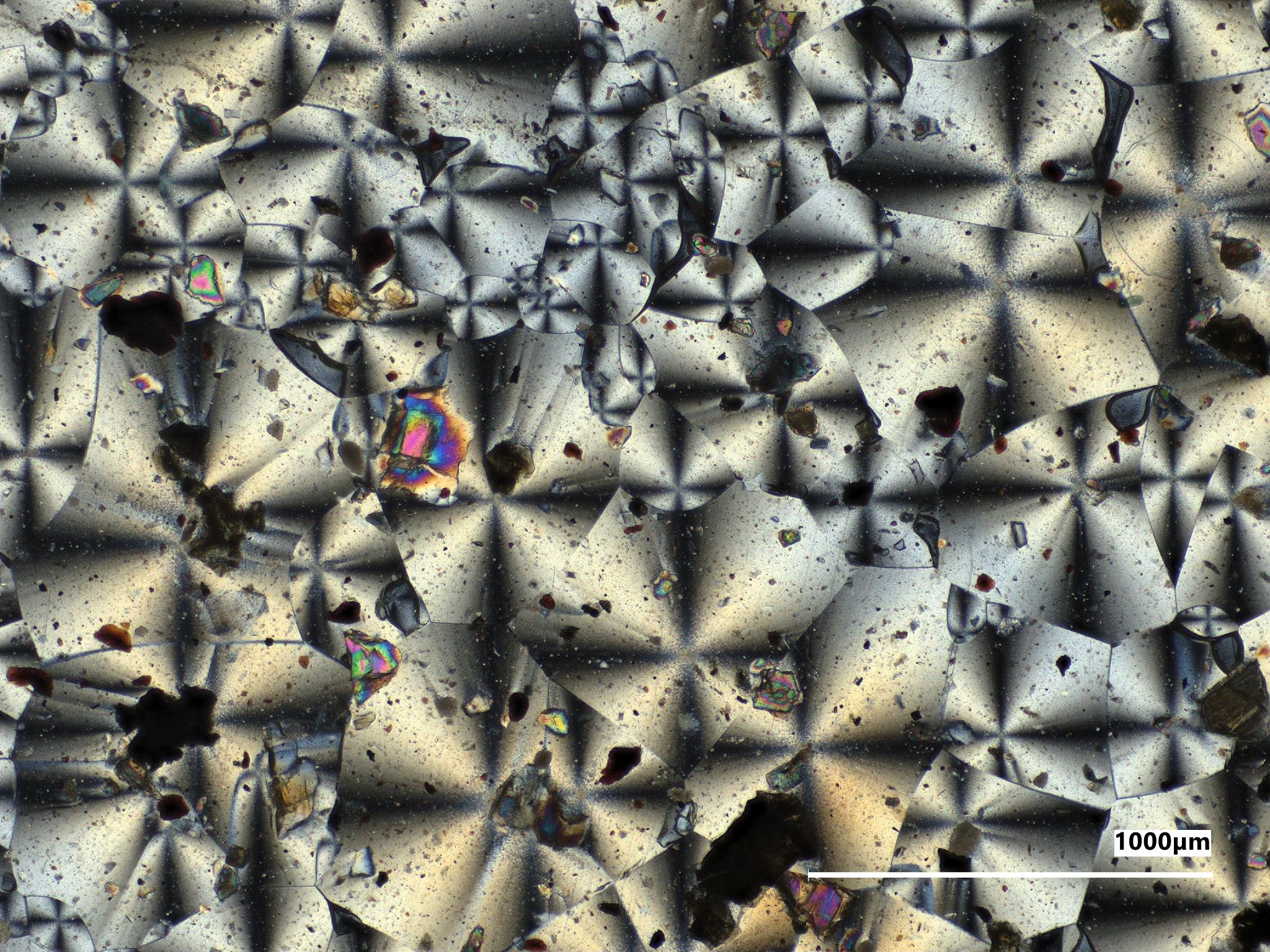
NASA has created a novel material at Glenn Research Center in Cleveland that displays a striking crystalline structure visible only under magnification. The breakthrough centers on a substance engineered to be produced directly on the Moon or Mars, fundamentally reshaping how future missions approach logistics and payload mass.
The material's most radical feature lies in its manufacturing approach. Rather than transporting finished components from Earth, astronauts and robotic systems could synthesize this material on-site using local resources. This strategy addresses one of spaceflight's oldest constraints: every kilogram launched from Earth requires enormous energy and fuel. By manufacturing critical materials in-situ, NASA reduces the mass requirements for deep space missions by orders of magnitude.
The Glenn Research Center team engineered the material to form stable crystal structures under the specific conditions present on lunar and Martian surfaces. Microscopic analysis reveals kaleidoscope-like patterns in the crystalline lattice, indicating controlled molecular organization. This precision matters because material properties depend on crystal structure. A well-ordered lattice delivers predictable strength, thermal stability, and other performance characteristics essential for construction and infrastructure.
The applications span multiple mission architectures. Habitat walls could incorporate locally-produced materials, reducing the need to ship tons of shielding and structural components across 238,000 miles of space. Equipment housings, radiation barriers, and thermal insulators all become candidates for in-situ manufacturing. For Mars missions, where supply chains involve six-month travel times and astronomical resupply costs, the advantage becomes exponential.
Glenn Research Center specializes in materials science and propulsion research. Their portfolio includes work on advanced alloys, ceramics, and composites designed for extreme environments. This crystalline material represents a convergence of that expertise with NASA's broader Artemis architecture, which aims to establish sustained lunar presence by the late 2020s.
The timeline for practical deployment remains uncertain, but NASA typically transitions lab discoveries into field applications within five to ten years. Engineers must test the material's performance under actual lunar and Martian environmental conditions, including vacuum exposure, temperature cycling, and radiation bombardment. Regolith simulants developed at facilities like NASA's Kennedy Space Center provide initial testing grounds before crewed missions validate the technology.
This work connects directly to NASA's broader manufacturing initiative for space. The agency has invested in 3D printing technologies, in-situ resource utilization (ISRU) systems, and materials science focused on extraterrestrial construction. SpaceX's Starship development parallels these efforts, with private industry exploring similar supply-reduction strategies for Mars colonization.
The colorful crystalline structures revealed under NASA's microscope represent more than aesthetic interest. They embody a philosophical shift in space exploration: from carrying everything from Earth to creating what we need where we need it. That shift reduces mission mass, lowers launch costs, and makes deep space exploration economically and logistically viable for sustained human presence.