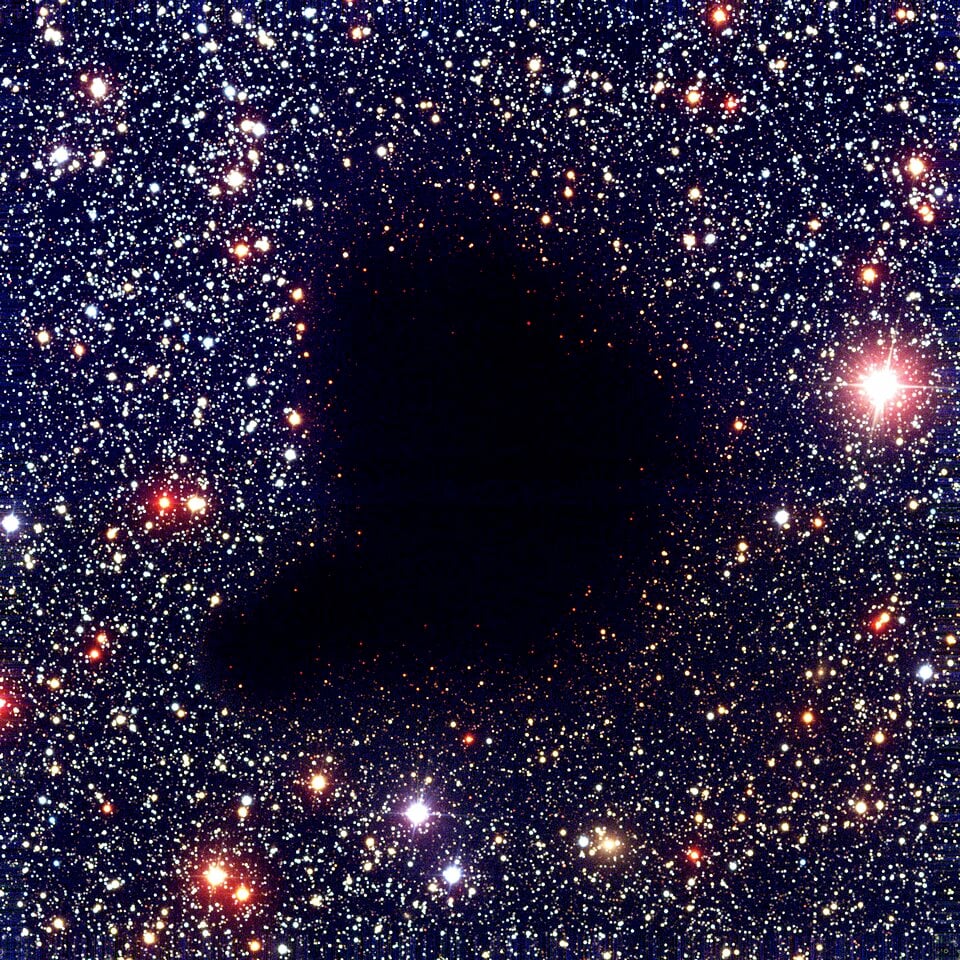
The universe is running out of steam. Starbirth rates have plummeted over the past 4.5 billion years, and astronomers now confront a puzzle that rewrites our understanding of cosmic evolution.
An international team led by Hong Guo of the Chinese Academy of Sciences investigated why the cosmos produces far fewer stars today than it did in the distant past. The rate of star formation peaked roughly 10 billion years ago, when the universe was in its youth. Since then, starbirth has declined dramatically. The question is not whether this decline happens. Observations confirm it does. The question is why.
The instinctive explanation points to depletion. Stars form from cold molecular clouds, concentrations of gas and dust scattered throughout galaxies. If star formation has slowed, perhaps the raw material itself has run out. But Guo's team looked deeper. They examined whether molecular clouds themselves are being consumed faster than they can be replenished, or whether some other process is suppressing the formation of new stars within existing clouds.
This distinction matters enormously. If the universe simply exhausted its supply of star-forming material, that tells us one story about cosmic aging. If something else is at work—feedback mechanisms, gravitational interactions, or environmental conditions that inhibit star birth—that tells a fundamentally different story about how galaxies evolve.
The researchers analyzed data across billions of years of cosmic history, tracking not just how many stars formed but how efficiently galaxies converted their gas into new stars. Their findings suggest that the story is complex. Molecular clouds are indeed being depleted, but the rate of depletion has actually slowed compared to the peak epoch of star formation. What has changed more dramatically is the efficiency with which clouds spawn stars. The universe is not just running out of fuel. It is becoming less effective at igniting that fuel.
This pattern aligns with observations of galaxy evolution. Massive galaxies around us today are largely "red and dead," composed mostly of old stars and containing little cold gas. By contrast, galaxies in the early universe burned through their gas at ferocious rates, converting material into stars with remarkable speed. Over time, feedback from supernovae and supermassive black holes has heated and ejected gas from galaxies, reducing the cold gas available for star formation and making it harder for what remains to coalesce into new stars.
The implications extend beyond curiosity. Understanding why star formation has crashed shapes how astronomers model galaxy evolution, predict the fate of our own Milky Way, and interpret observations from the James Webb Space Telescope and other instruments studying the early universe. If the universe continues its current trajectory, star formation will decline further. Within trillions of years, the epoch of star birth will effectively end. The universe will enter an era of slow stellar death and deep cosmic darkness.
Guo's work provides a detailed roadmap of that transition. It reveals that the universe's decline in starbirth reflects not simply resource exhaustion but a fundamental shift in how galaxies operate, how they retain their gas, and how forcefully they regulate their own evolution.