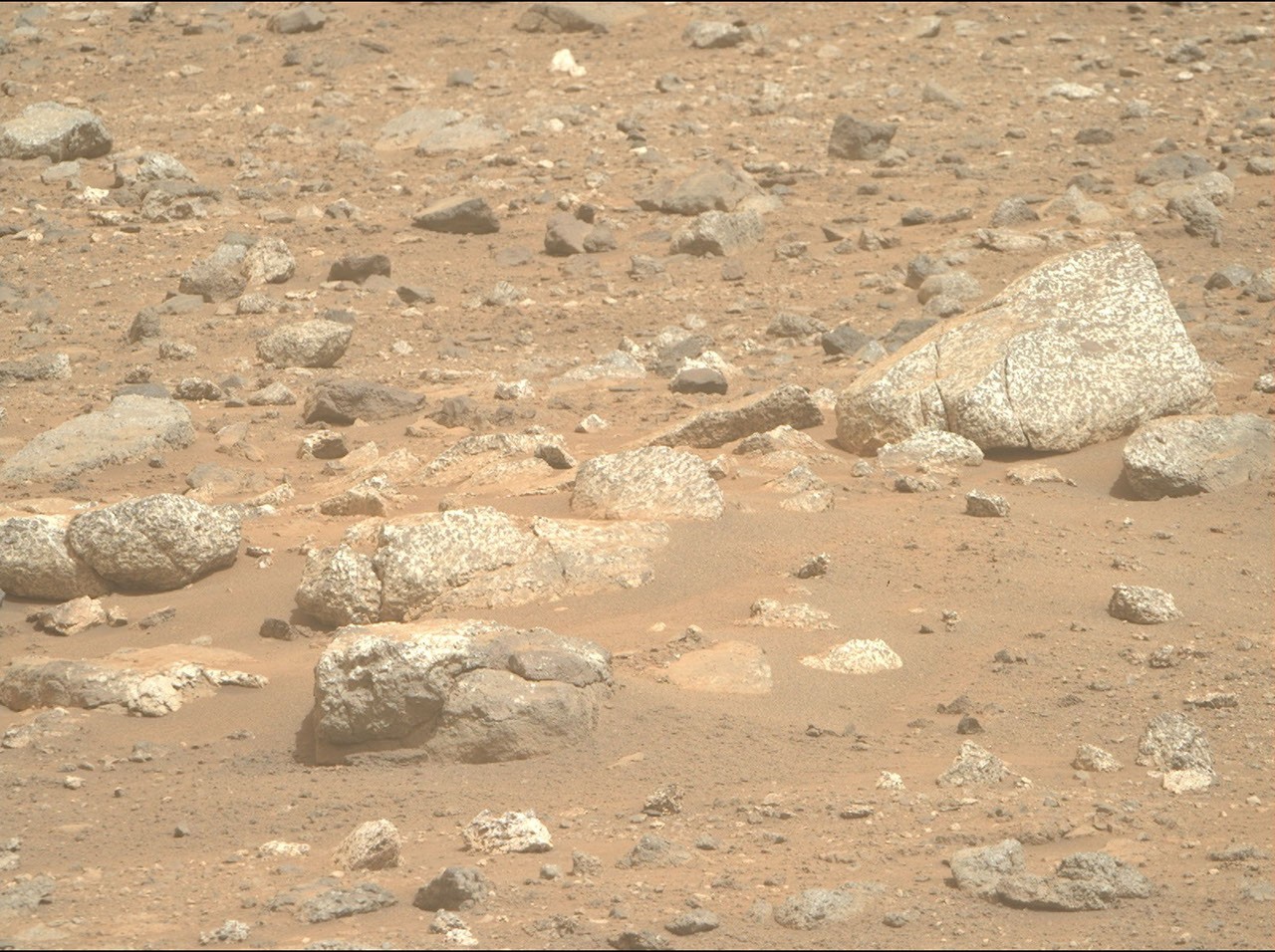
Perseverance rover has discovered a vast field of light-toned rocks in a region called "Lac de Charmes," located beyond the western rim of Jezero crater. The rover spent six months exploring this area of ancient rock formations before making the finding.
Light-colored rocks represent an unusual geological feature on Mars. The discovery occurs as Perseverance continues its extended mission investigating the Martian surface for signs of ancient habitability and geological history.
Jezero crater served as Perseverance's original landing site in February 2021. The rover's westward expansion beyond the crater's rim extends its scientific reach into previously unexplored terrain. The "Lac de Charmes" region contains rocks that differ visibly from typical Martian surface materials in their coloration.
According to the source material provided by NASA, the light-toned rocks pepper the Martian surface across this field. The significance of these formations remains unexplained in the available information, though their unusual appearance warrants investigation by the rover's instruments.
Perseverance carries tools designed to analyze rock composition, including spectrometers and cameras capable of detailed mineral identification. These instruments enable the rover to determine whether the light-colored rocks formed through specific geological processes or represent distinct mineral compositions.
The discovery adds to Perseverance's ongoing contributions to Mars science. Since its arrival, the rover has collected samples, documented geological layers, and searched for organic compounds and biosignatures. The extension of its exploration westward from Jezero crater demonstrates the mission's continued productivity beyond its primary objectives.
The rover's ability to traverse new terrain and encounter unexpected geological features underscores the value of extended Mars missions. Each new region explored provides additional data about Mars' geological history and past environmental conditions.