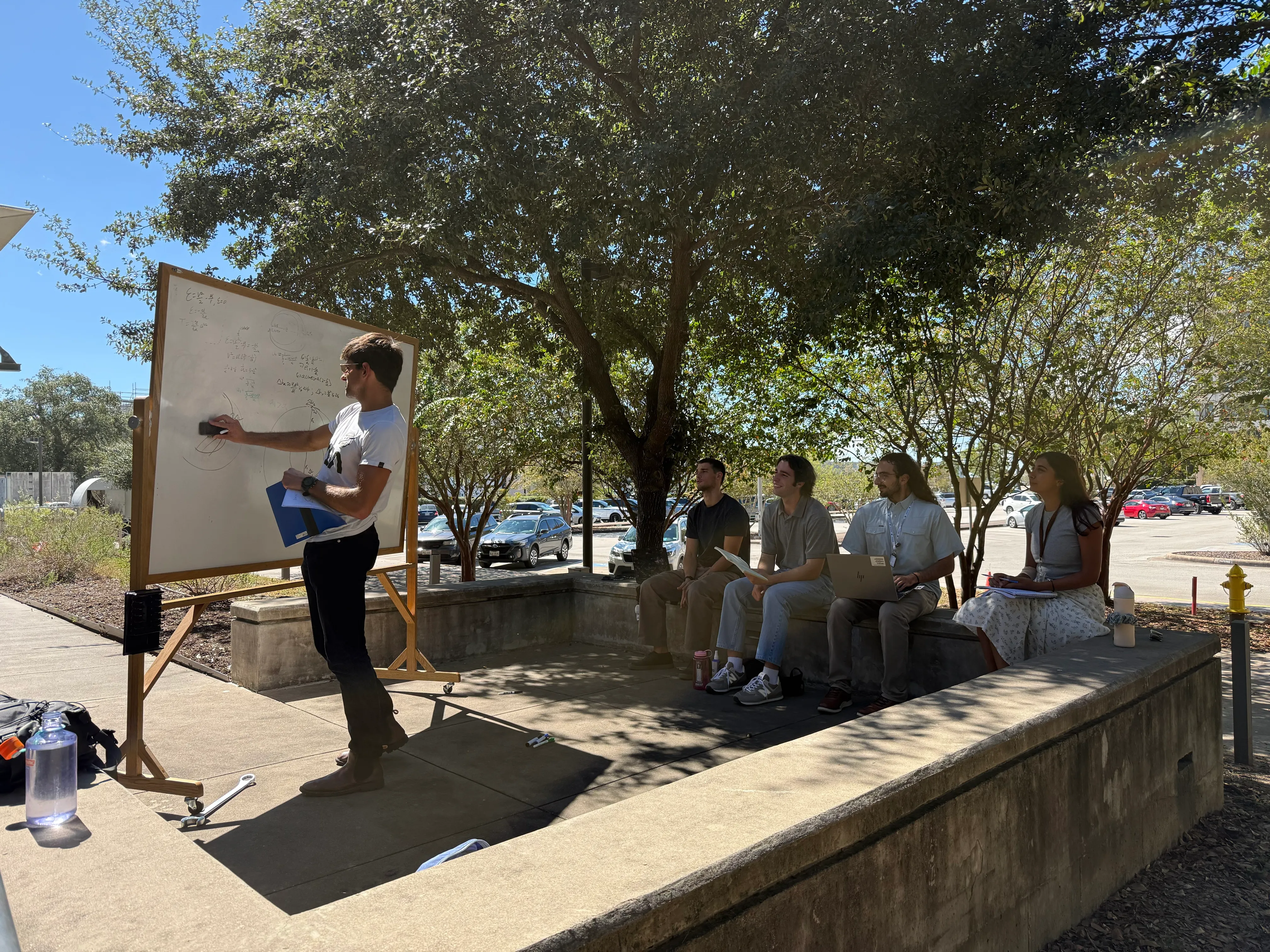
Daniel Cohen, a Guidance, Navigation and Control engineer at NASA's Johnson Space Center, has become a quiet architect of the agency's future workforce. When Rice University student Malvika Bhardwaj asked whether he could continue mentoring interns despite his demanding schedule, Cohen's answer was definitive: "You decide what's important."
That philosophy has shaped how Cohen approaches mentorship. Rather than treating intern supervision as an obligation squeezed between project deadlines, he treats it as core to his role. The impact extends far beyond individual interns. Johnson Space Center relies on a steady pipeline of trained talent to support ongoing operations for the International Space Station, the Artemis program, and advanced spacecraft systems.
Bhardwaj's experience illustrates the practical value of this approach. As a Rice student working in GN&C, she gained direct exposure to the systems that keep spacecraft stable, pointed correctly, and capable of autonomous decision-making in space. These are not abstract concepts taught in classrooms. GN&C engineers solve real problems: How does a spacecraft know its orientation? How does it correct course? What happens if primary systems fail? Working under Cohen's mentorship, interns confront these questions through actual flight hardware and software systems.
Johnson Space Center has long operated as a training ground for aerospace engineers and mission specialists. The Houston facility, home to Mission Control and astronaut operations, attracts talent from universities across the country. Yet mentorship quality varies. Some mentors view intern programs as resume builders for younger staff. Cohen views them differently. His mentoring addresses the gap between academic preparation and operational reality. University curricula cannot replicate the complexity of crewed spaceflight systems or the stakes involved when failures affect human lives.
National Mentoring Day, observed on October 27, draws attention to these informal relationships that often escape official recognition. While NASA invests in formal training programs, structured coursework, and certification paths, the most transformative learning often happens in one-to-one interactions. A mentor who blocks time on his calendar sends a message about priorities. A mentor who connects theory to practice accelerates professional development. A mentor who demonstrates how to balance technical depth with broader mission awareness shapes how the next generation approaches problems.
For NASA, this matters operationally. The agency faces workforce challenges common to large government organizations: retirements, attrition, and competition from commercial aerospace companies offering higher salaries. Building loyalty early through quality mentorship creates advocates. Interns who work under engaged mentors like Cohen are more likely to accept NASA job offers and to bring institutional knowledge forward.
The GN&C field specifically needs qualified engineers. As NASA develops the Artemis lunar program and plans eventual Mars missions, navigation and control systems become more sophisticated. Autonomous operations over communication delays, landing precision on bodies with limited surface data, and redundant safety systems all demand expertise that takes years to develop. Mentors at Johnson Space Center help compress that learning curve.
Bhardwaj's reflection on Cohen's mentorship ripples outward. Her experience at Johnson influences where she will direct her career. Her colleagues see how serious Cohen takes mentoring and adjust their own approaches. Future interns benefit from a culture where engineering excellence and talent development reinforce each other. In this way, one mentor's commitment compounds across generations of aerospace professionals.