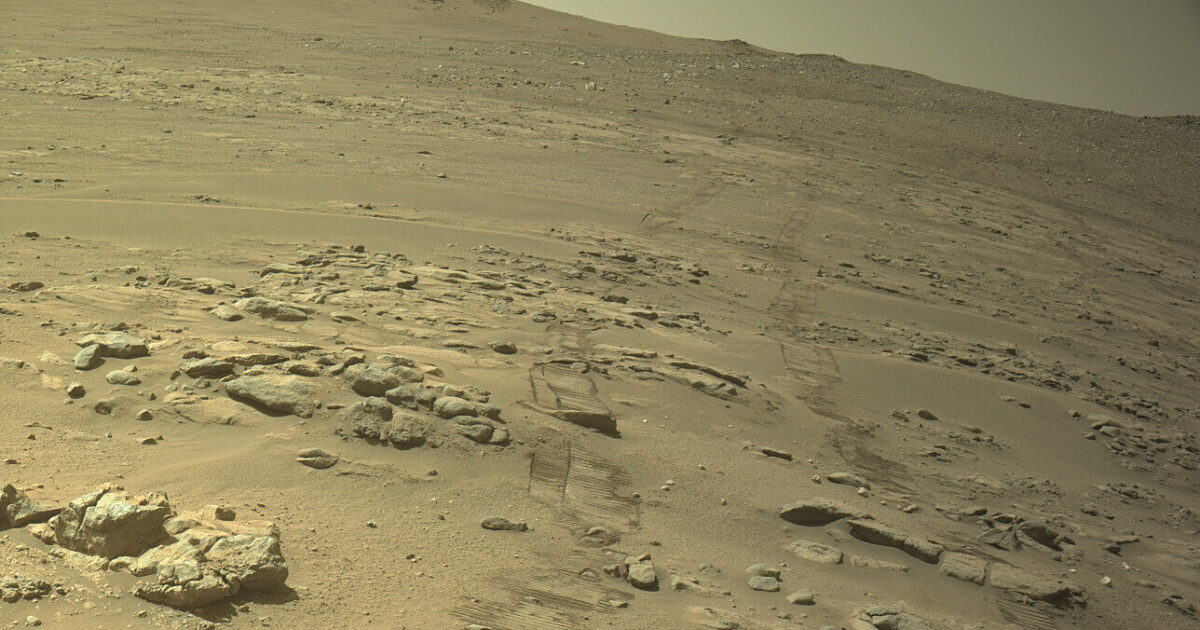
NASA's Perseverance rover set the record for distance driven on another world on October 11, surpassing the 45.16 kilometers traveled by NASA's Opportunity rover before it shut down in 2018. Perseverance now holds first place in the rover distance record. The Soviet Union's Lunokhod 2, which launched to the Moon in 1973, ranks third with 39 kilometers of travel.
NASA's Curiosity rover needs to travel slightly less than 1 kilometer more to exceed Lunokhod 2's distance. As of August, Curiosity reached a separate milestone by traveling 1 kilometer of vertical distance while climbing Mount Sharp on Mars.
Astronomers studying white dwarf stars report that trace elements in the stars' atmospheres could produce pink, purple, yellow, cyan, and even green colors. The stars are too dim for naked eye observation, but scientists inferred their colors using measurements across a range of wavelengths.
The Orionid meteor shower peaks between October 21 and 22, typically producing about 20 meteors per hour from a dark site. A waxing gibbous Moon will reduce visibility during the early and middle portions of the night until the Moon sets.
NASA astronaut Christina Koch, part of the Artemis II crew, is stepping away from active flight duty to serve as the agency's acting deputy chief engineer. With Koch's transition, all Artemis II crew members have moved on from eligibility for future space missions.
The Japanese MMX mission is set to launch to Mars' moon Phobos as early as October 19, equipped with technology funded by The Planetary Society. The mission aims to bring back the first-ever samples from Phobos using a tool based on PlanetVac technology.