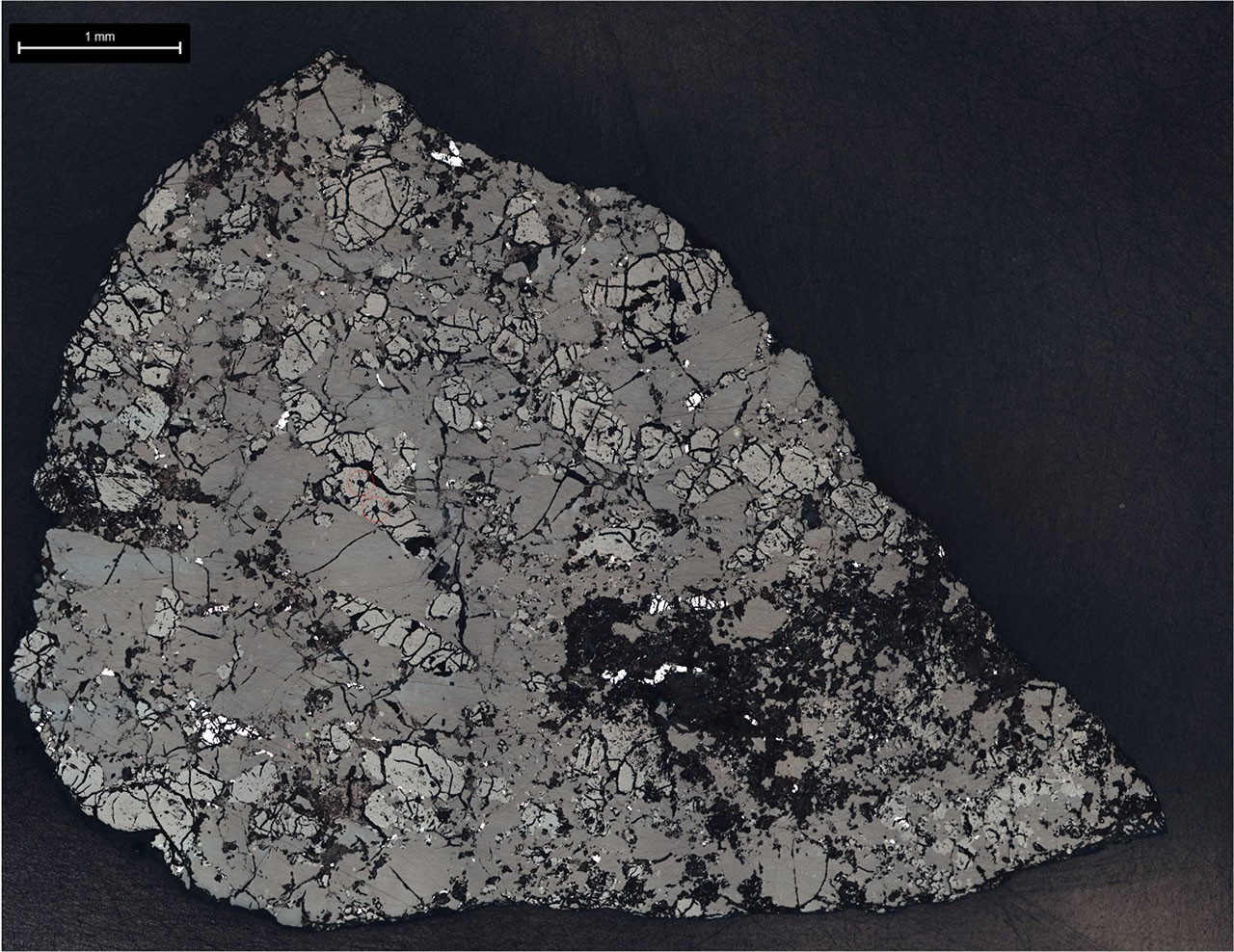
This slice of Teghaza 001, one of the most ancient Martian meteorites ever found on Earth, was analyzed to determine the rock's age. Reflected light images of the sample serve as a guide for scientists to locate minerals for further analysis.
The slice contains iron-titanium oxides, pyroxene, and shocked plagioclase. The iron-titanium oxides and pyroxene reveal information about the formation of Mars' crust and mantle. Shocked plagioclase formed under extreme pressures during the impact event that launched Teghaza 001 toward Earth. Fine grain carbonate, sulfate, and clay minerals visible in the sample formed after the meteorite arrived on Earth.