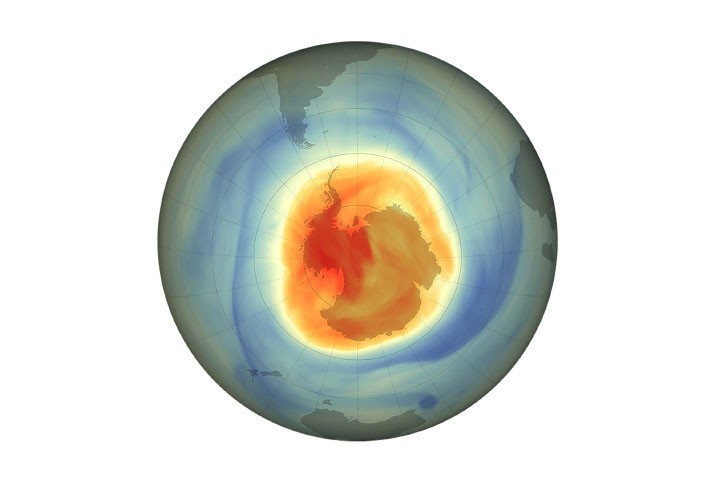
The 2026 ozone hole reaching seventh-largest status in 48 years of monitoring might sound like progress, but it obscures a frustrating reality: we are still decades away from healing the atmospheric wound we created. Yes, scientists reported the first direct satellite evidence of ozone recovery in 2018, observing a 20 percent decrease in ozone depletion during Antarctic winter months from 2005 to 2016. Yes, the 1987 Montreal Protocol represented genuine global cooperation on an environmental crisis. Yet the stratospheric ozone will not return to pre-1980 levels until later in the 21st century—meaning children born today may reach retirement age before the damage is fully repaired.
The 2026 hole's characteristics reveal the complex nature of this ongoing crisis. Measured by its mean size from September 7 to October 13, the hole ranked seventh largest, yet it was not as deep as other large holes on record. This paradox matters. The hole's size and depth depend on stratospheric temperature and circulation patterns—in 2026, an unusually strong Antarctic polar vortex created ideal conditions for ozone depletion over a large area. We cannot control these meteorological variations, which means even as we reduce ozone-depleting chemicals, nature's year-to-year fluctuations will continue to surprise us. The 2019 ozone hole, for instance, became the smallest since 1982 due to abnormal weather patterns, illustrating how climate factors can mask or amplify our progress.
Understanding how we arrived at this crisis reminds us what's at stake. Scientists had not observed atmospheric ozone concentrations below 220 Dobson Units prior to 1979. But in 1985, British Antarctic Survey scientists using ground-based measurements at Halley Research Station reported dramatic thinning. The culprit was chlorofluorocarbons—CFCs—chemicals used in refrigerators and aerosol sprays since the 1930s. When CFCs reach the stratosphere, ultraviolet light breaks them apart, releasing chlorine that repeatedly catalyzes ozone destruction. The deepest ozone hole occurred in 1994, when concentrations fell to just 73 DU on September 30, a stark reminder of how severe the damage became.
Today, about 80 percent of the chlorine in the stratosphere comes from human, not natural, sources. Human-produced bromine compounds, which are far less abundant but much more destructive to ozone, also contribute to the hole. Scientists estimate the Antarctic ozone layer will return to 1980 levels in the 2070s. That timeline should alarm us. The stratospheric ozone layer protects life on Earth by absorbing ultraviolet light, which damages DNA in plants and animals and leads to sunburns and skin cancer. Every year the hole persists represents continued risk.
The Montreal Protocol succeeded where international climate negotiations have largely failed, yet even that treaty's success demonstrates how long atmospheric recovery takes. We need renewed commitment to understanding these meteorological variations and accelerating the removal of remaining ozone-depleting substances. The seventh-largest hole in 2026 is not a victory—it is a reminder that even our greatest environmental successes demand patience we can barely afford.