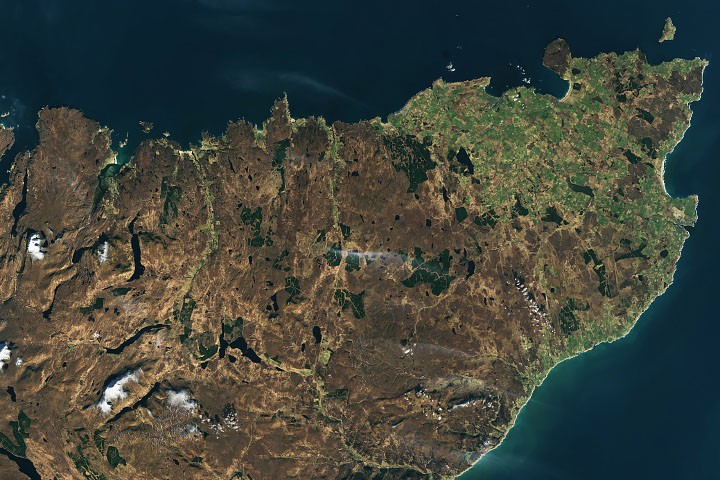
The recent designation of Scotland's Flow Country peatlands as a UNESCO World Heritage Site recognizes what scientists have long understood: these soggy, treeless landscapes in the Scottish Highlands represent one of Earth's most critical carbon storage systems. Yet recognition alone is insufficient. The Flow Country and similar ecosystems worldwide demand urgent protection and restoration as humanity confronts the climate crisis.
The numbers tell a compelling story. While blanket bogs cover less than one-tenth of one percent of Earth's land surface—just 120,000 square kilometers globally—they store more than 600 gigatons of carbon, roughly twice as much as all the world's forests combined. The Flow Country itself, spread across some 1,900 square kilometers of the Scottish Highlands, has been accumulating peat for more than 9,000 years, with deposits exceeding eight meters thick in some areas. This carbon sequestration occurs because the waterlogged soils prevent microbes from fully decomposing dead plant material, instead allowing partially decayed matter to accumulate into thick layers of peat.
What makes peatlands fundamentally different from forests is permanence. While forests store carbon in living trees that eventually release it back into the atmosphere when they burn or die, peat bogs lock away carbon for millennia. The Flow Country's more than 30 species of sphagnum moss, visible from satellite imagery as dark brown areas sprinkled with lakes, have proven themselves to be nature's carbon vaults.
Yet the Flow Country faces threats. Satellite imagery captured by the Operational Land Imager on Landsat 8 shows conifer plantations—darker green geometric patterns—encroaching on the bog ecosystem. These plantations represent a fundamental misuse of irreplaceable carbon-storage terrain. Drainage for agriculture and forestry directly undermines the waterlogged conditions essential to peat accumulation and carbon preservation.
Scotland's achievement in designating the Flow Country as Europe's largest blanket bog ecosystem and the first of its type to receive UNESCO World Heritage status is commendable. However, designation must translate into action. Policymakers should prioritize restoration of degraded peatlands, halt further drainage and afforestation of these ecosystems, and establish strict protections against development. The conifer plantations visible in spring satellite imagery should be reconsidered.
The Flow Country represents a biological solution to carbon storage that took 9,000 years to build. We cannot afford to destroy it in decades. Protecting these Scottish bogs is not merely environmental stewardship—it is climate policy in its most elegant form.