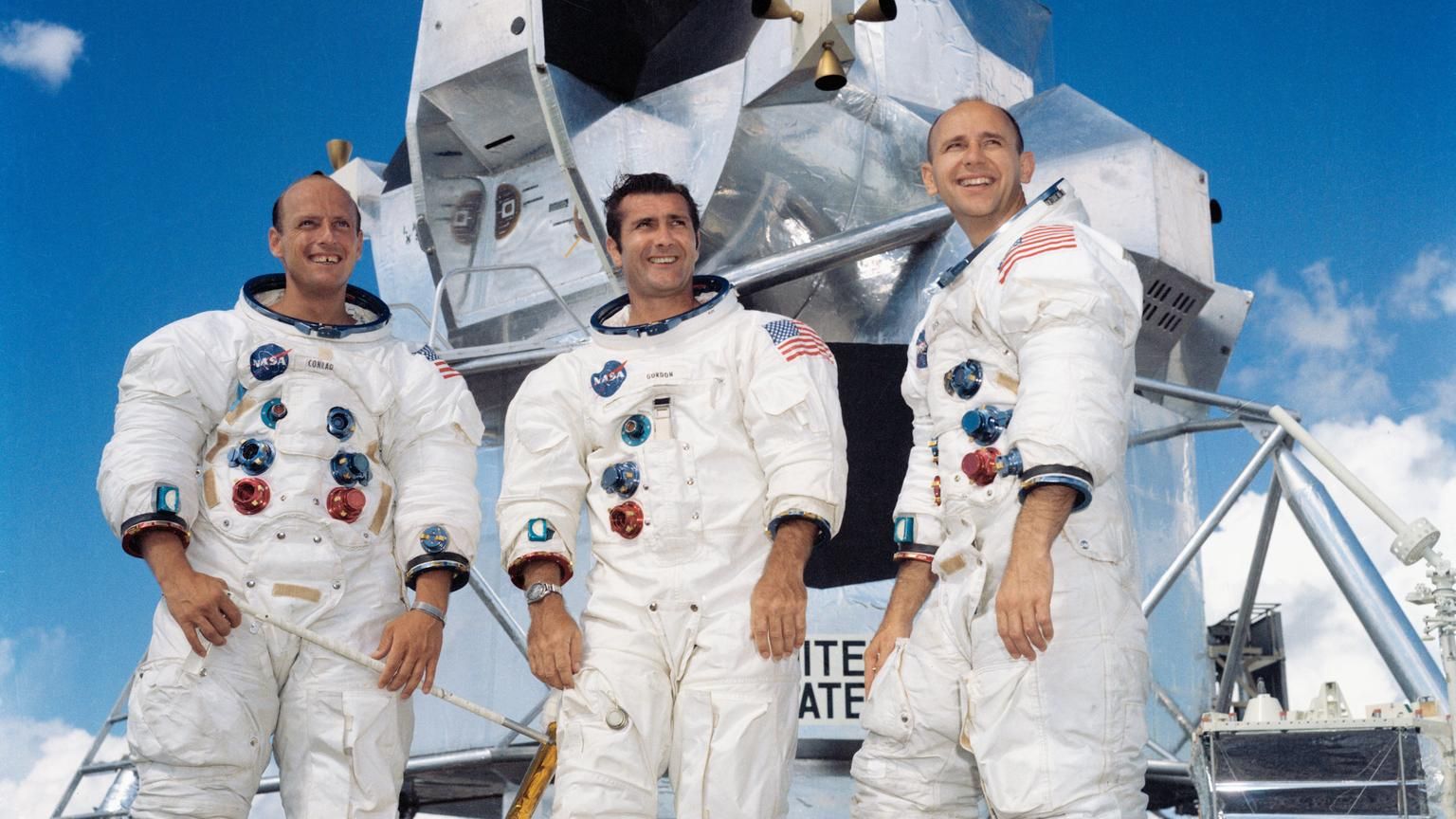
On November 14, 1969, NASA launched Apollo 12, the second crewed moon landing. Commander Pete Conrad and lunar module pilot Alan Bean landed in the Ocean of Storms, while command module pilot Richard Gordon orbited above. The mission achieved a pinpoint landing near Surveyor 3, a robotic lander that had touched down more than two years earlier. Scientists wanted to examine how well Surveyor 3 had endured on the lunar surface.
Conrad and Bean collected 75 pounds of moon rocks from the landing site. Most were basalts formed from ancient lava flows, indicating the Apollo 12 landing area is more than 3 billion years old. The astronauts also visited and sampled Surveyor 3 itself, returning pieces to Earth.
Unlike Apollo 11, which drifted far from its planned landing zone, Apollo 12 landed close to a predetermined scientific target. The mission demonstrated that precise landings near areas of geological interest were possible, enabling future Apollo flights to conduct more focused lunar science.