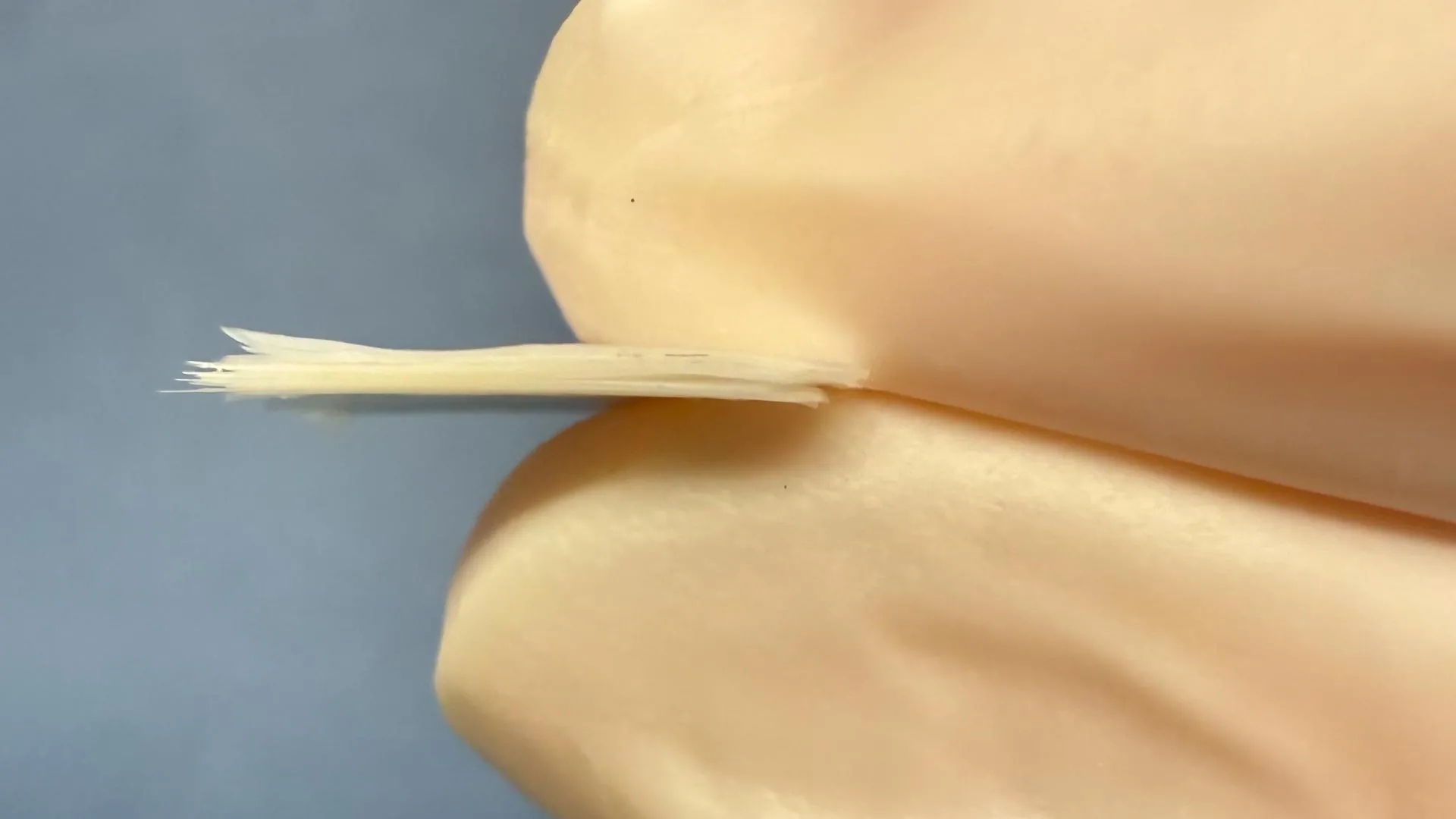
Researchers at the University of Pennsylvania have created an insulation material called hybrid layered insulating film stacks (HyLIFS) that could protect lunar habitats and equipment. The material stacks hundreds of thin sheets of Mylar, a plastic used in emergency blankets, to achieve both thermal insulation and resistance to physical damage.
The work, published in ACS Applied Materials & Interfaces, addresses a central challenge for Moon bases. Existing insulators often sacrifice durability for thermal performance or vice versa. Aerogels retain heat effectively but break easily under impact. Multilayer insulation reflects radiation well but tears under routine stress.
The Penn team, led by Igor Bargatin and Danielle R. Levin, found that stacking Mylar sheets with thin coatings of aluminum oxide produced material that bends, resists compression, and maintains insulating performance. In testing, the stacks survived compression to approximately 20 megapascals, a pressure equivalent to 200 pounds of force on a fingertip, repeated 10 consecutive times.
"These stacks of Mylar can bend, withstand substantial compression and maintain their insulating performance," Bargatin said, "potentially allowing them to be packed, transported and survive rough treatment over many years of use."
The researchers also discovered that tiny antiblocking particles naturally present in commercial plastic films influence heat transfer in the stacked layers. The findings suggest a pathway to inexpensive, durable lunar insulation that astronauts could use and potentially reuse during extended Moon base operations.