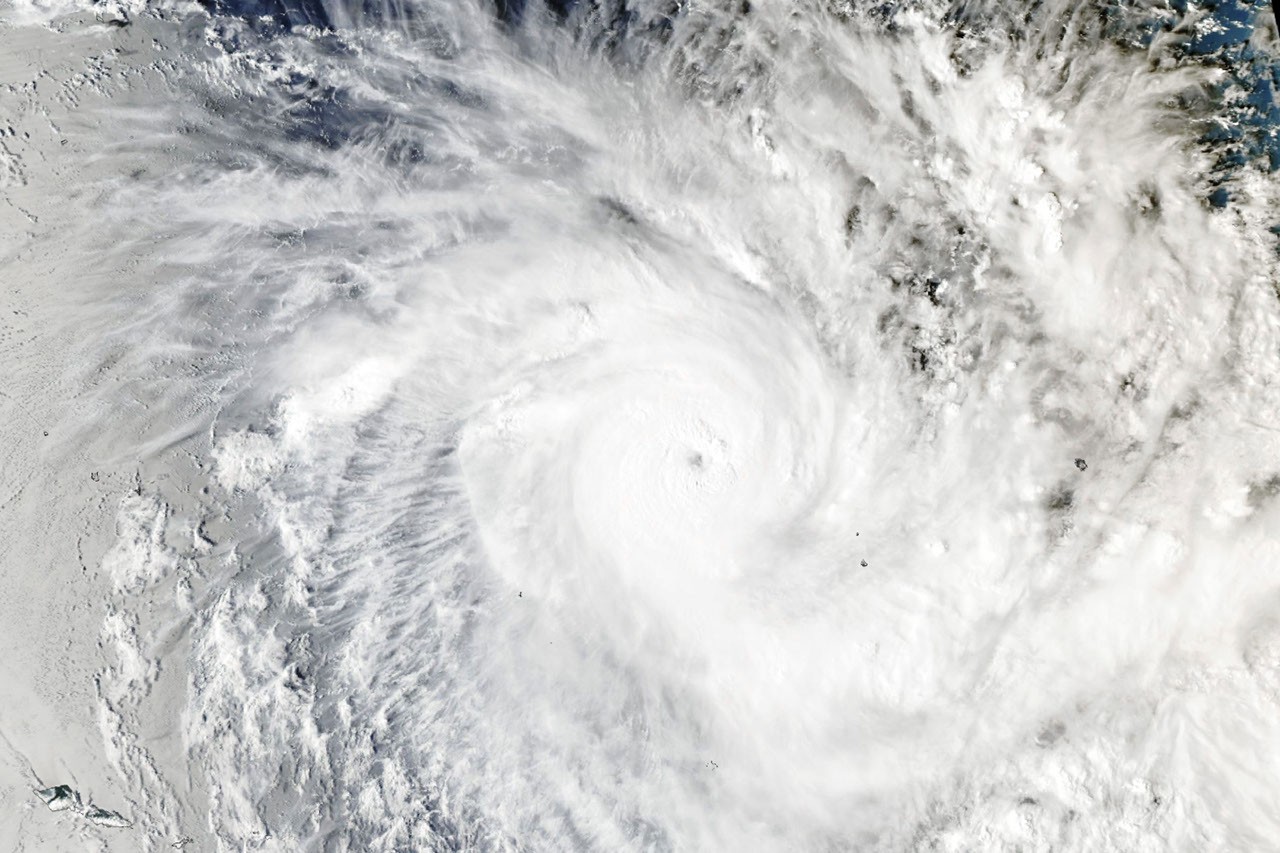
Tropical Cyclone Xavier rapidly intensified in the Southwest Pacific in mid-November 2026, becoming one of the most intense November tropical cyclones the region has seen in decades. The Fiji Meteorological Service first tracked the system as a slow-moving tropical disturbance northeast of Samoa and the Cook Islands on November 15. Within days, Xavier strengthened dramatically in an environment with minimal wind shear and sea surface temperatures of 29 degrees Celsius (84 degrees Fahrenheit), well above the threshold needed to sustain developing tropical cyclones.
NASA's MODIS instrument on the Aqua satellite captured the storm on November 17, 2026, when forecasters estimated maximum winds of about 195 kilometers (120 miles) per hour. Winds peaked at 220 kilometers (140 miles) per hour later that day, making Xavier a Category 5 storm on the regional cyclone intensity scale or a Category 4 on the Saffir-Simpson scale. Colorado State University hurricane expert Phil Klotzbach noted that Xavier ranks as the strongest November tropical cyclone east of the international date line on record.
NASA satellite data revealed Xavier developing along the southwestern edge of a massive tongue of warm water spanning from South America to the central Pacific, a telltale sign of El Niño conditions present in the region since June. Research shows that El Niño typically shifts storm activity northeast in this region and fuels storms that strengthen at unusually rapid rates. Xavier's easterly position near the northern Cook Islands aligned with this pattern, though formation so far east was unusual.
The storm damaged homes and caused power disruptions in the northern Cook Islands before encountering dry air and unfavorable wind shear. It weakened as it pushed westward, reducing threats to Samoa and American Samoa. The Fiji Meteorological Service projects the region could see between 11 and 15 named tropical cyclones this season, with greatest risk east of the international date line. Storm activity in the Southwest Pacific basin typically peaks in February.