# Multiple Paths to Planetary Defense and Science Advocacy
The Planetary Society has highlighted an unexpected truth about advancing planetary science and protecting Earth from cosmic threats: impact comes in many forms, and expertise alone does not drive change.
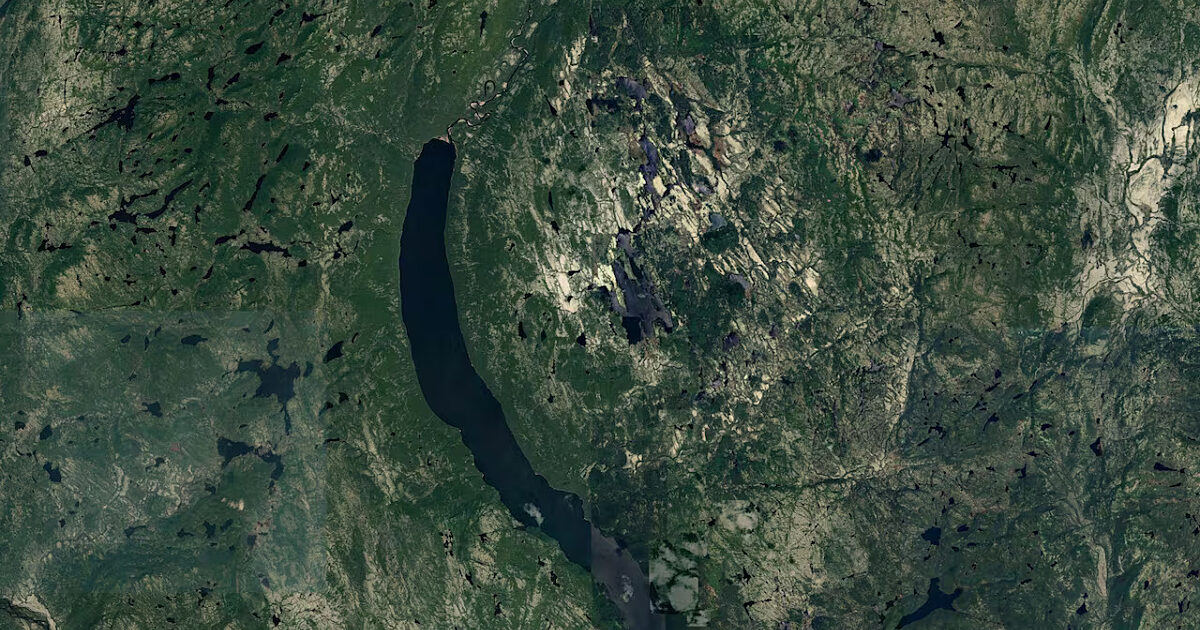
The organization points to four distinct approaches that collectively strengthen humanity's relationship with space exploration and planetary defense. Crater discovery represents the traditional scientific avenue. Researchers mapping impact sites on Earth and other worlds build the geological record that informs our understanding of bombardment history and extinction events. This work directly feeds into asteroid risk assessment models and helps scientists distinguish between natural impacts and human-caused disasters.
Speaking against anti-science policies comprises the advocacy dimension. Scientists and science communicators who enter political debates shift the cultural conversation around space exploration funding, climate research, and planetary protection protocols. These voices prove essential when legislatures decide whether to fund NASA missions, support international asteroid monitoring networks, or strengthen planetary quarantine standards for Mars exploration programs.
Preventing asteroid impacts represents the practical frontier. NASA's Double Asteroid Redirection Test (DART) demonstrated in 2022 that kinetic impact can alter an asteroid's trajectory. The agency's Planetary Defense Coordination Office now coordinates with international partners to track near-Earth objects and develop deflection technologies. The European Space Agency's Hera mission, launching in 2025, will conduct detailed reconnaissance of the asteroid Didymos after DART's impact to measure results and refine future deflection strategies.
Making art about space and planetary science addresses the communication challenge that pure data cannot overcome. Visual artists, filmmakers, and musicians translate complex orbital mechanics and extinction science into forms that reach audiences unreachable by peer-reviewed papers. Museums like the Smithsonian's National Air and Space Museum commission installations about impact hazards and space exploration, generating public engagement that ultimately builds political will for space programs.
The Planetary Society's message reflects a maturation of the space field. For decades, planetary defense occupied a niche occupied primarily by academic researchers and space agencies. Today, preventing catastrophic impacts requires funding decisions, public understanding, technological development, and cultural shifts. Each pathway carries equal weight.
Near-Earth object detection has accelerated dramatically. The NASA-funded Catalina Sky Survey discovers hundreds of asteroids annually. The Vera Rubin Observatory, beginning operations in Chile in 2025, will identify significantly more objects. Yet detection without deflection capability, without public awareness, and without political commitment remains incomplete.
The Planetary Society's framing reflects another reality: space exploration itself has become a multidisciplinary endeavor. The same organization that employs planetary scientists also publishes art books about Mars and advocates for NASA budget increases. This integration of disciplines strengthens the entire field.
Whether through crater mapping, policy advocacy, impact prevention technology, or artistic interpretation, contributions to planetary science and safety prove genuine. The asteroid impact threat remains real. The response to that threat requires scientists, engineers, artists, and advocates working in parallel. Each adds irreplaceable value to humanity's long-term survival and our species' continued exploration of the solar system.