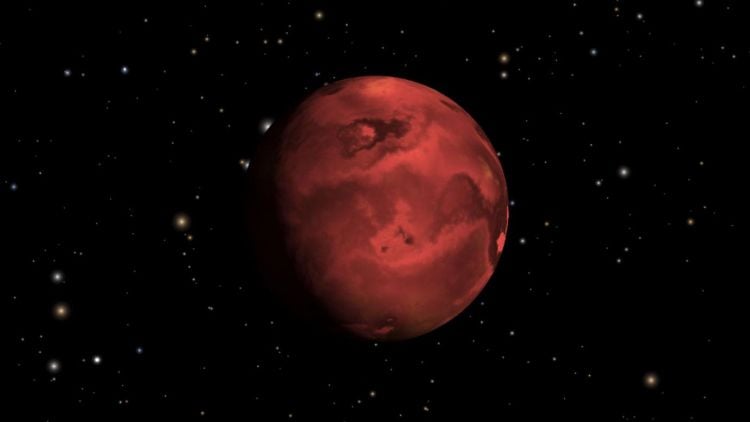
Astronomers have detected an atmosphere surrounding one of the coldest known lava exoplanets, a discovery that expands understanding of which ultra-hot worlds can retain gaseous envelopes despite extreme stellar bombardment.
The exoplanet, orbiting extremely close to its host star, experiences surface temperatures that vaporize rock into molten flows. Yet spectroscopic observations reveal it maintains an atmosphere, challenging assumptions about atmospheric retention on worlds subjected to intense stellar radiation and gravitational stress.
Lava planets represent a distinct class of exoworlds that orbit their stars in just hours or days, placing them far closer than Mercury sits to our Sun. These ultra-short-period orbits create infernal surface conditions where rock melts into oceans of liquid magma. Tidal forces from their host stars also warp and heat these worlds through constant flexing of their interiors.
Scientists have long debated whether lava planets could hold atmospheres at all. Theory suggested that extreme ultraviolet radiation and stellar wind from host stars would strip away any gaseous layers. Yet previous observations of hotter lava worlds demonstrated that some retain atmospheres, sometimes surprisingly dense ones composed of vaporized rock and metal oxides.
This detection marks the first confirmed atmosphere on a comparatively cooler lava exoplanet, expanding the range of conditions under which these extreme worlds retain their envelopes. The "cooler" designation remains relative. Surface temperatures still exceed 2,000 Kelvin, hot enough to transform silicate rock into vapor. But compared to the most extreme ultra-hot Jupiters and lava planets observed, this world occupies a less punishing thermal regime.
Characterizing lava planet atmospheres provides direct tests of planetary physics at extremes. Researchers can measure atmospheric composition, density, and escape rates, then compare observations against models predicting how planets lose their atmospheres over time. Each detection constrains which physical processes dominate atmospheric loss on these worlds.
The discovery also informs broader exoplanet demographics. Surveys of nearby star systems reveal that ultra-short-period planets, while rare in our solar system, populate substantial fractions of exoplanetary systems around other stars. Understanding their atmospheric behavior shapes interpretations of population statistics and formation histories across the galaxy.
Transit spectroscopy enabled this detection. As the lava planet passed in front of its host star from Earth's viewpoint, starlight filtered through the exoplanet's thin atmosphere. Different gases absorbed specific wavelengths, creating absorption signatures that observers detected using space-based or ground-based telescopes. Analysis of these spectral fingerprints revealed atmospheric composition and density.
This result joins a growing catalog of lava world characterizations that challenge conventional planetary science. Each discovery pushes investigators to refine models of planetary formation, atmospheric retention, and long-term habitability. While lava planets themselves remain inhospitable to life as currently understood, studying their extreme environments illuminates planetary physics applicable to temperate worlds orbiting distant stars.
Future observations using next-generation spectroscopic instruments will target additional lava planets and ultra-hot worlds, building a more complete picture of atmospheric survival on planets subjected to stellar violence. These measurements contribute essential context for identifying habitable exoworlds and understanding the full diversity of planetary types throughout the cosmos.