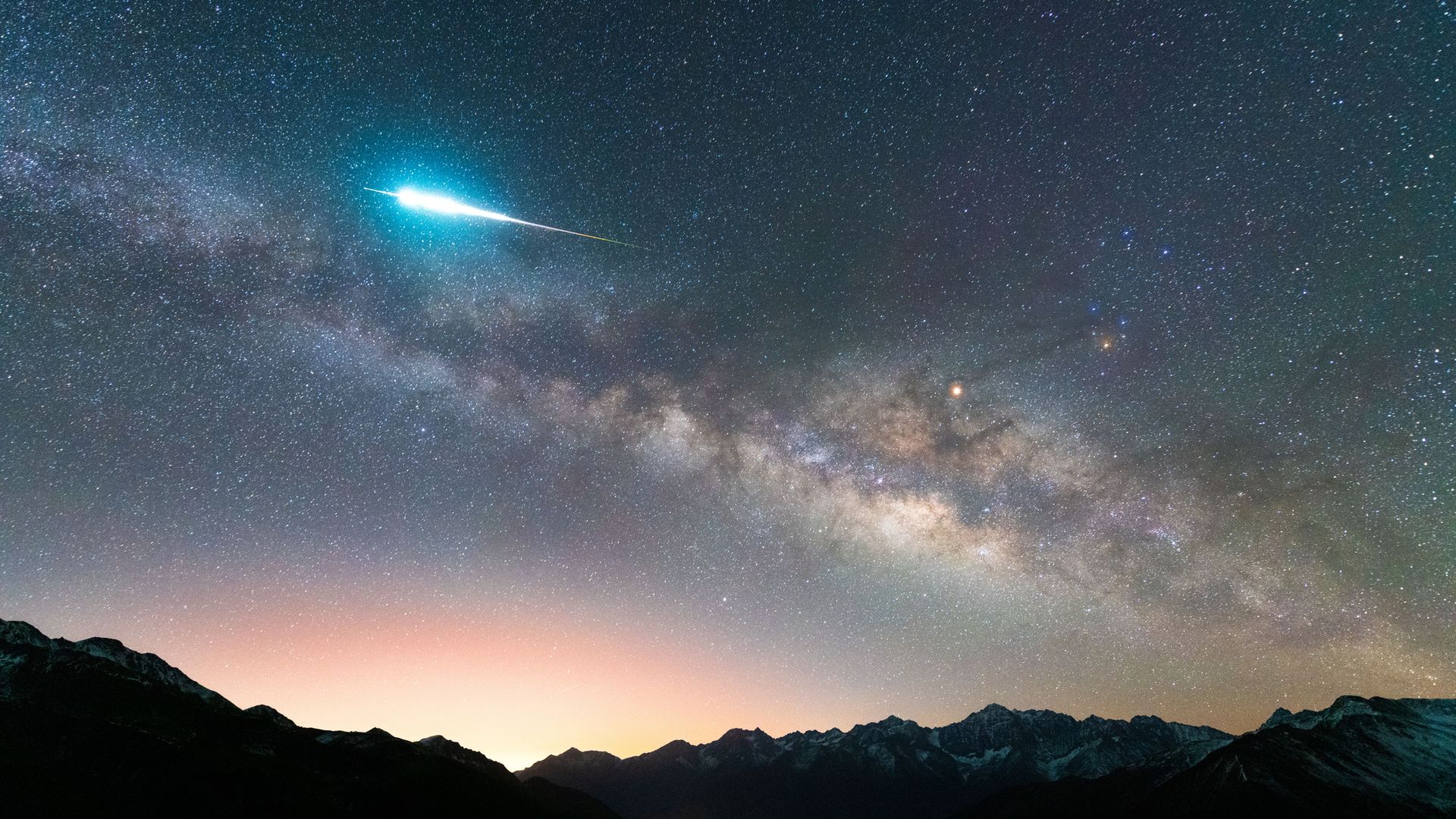
The Taurid meteor shower peaks twice in November as Earth passes through debris streams left by Comet Encke, a 3-mile-wide body that orbits the sun every 3.3 years.
The Southern Taurids peak overnight on November 4-5, with up to five meteors per hour predicted. The Northern Taurids peak overnight on November 11-12, also with up to five meteors per hour. Both peaks are marked by increases in fireball activity. The Taurids are known for producing brilliant fireballs, which occur when pebble-sized debris enters Earth's atmosphere at 65,000 miles per hour and burns up, sometimes flaring brighter than Venus.
The meteors appear to radiate from the constellation Taurus, which rises in the southeastern sky during November evenings. To observe them, stargazers should head to a dark sky location around midnight on peak nights. Avoid looking directly at the radiant in Taurus. Instead, scan a patch of sky at some distance from the constellation, where meteors will show longer, more visible trails. Never use telescopes or binoculars. Allow 20 to 30 minutes for eyes to adapt to darkness before attempting observation.