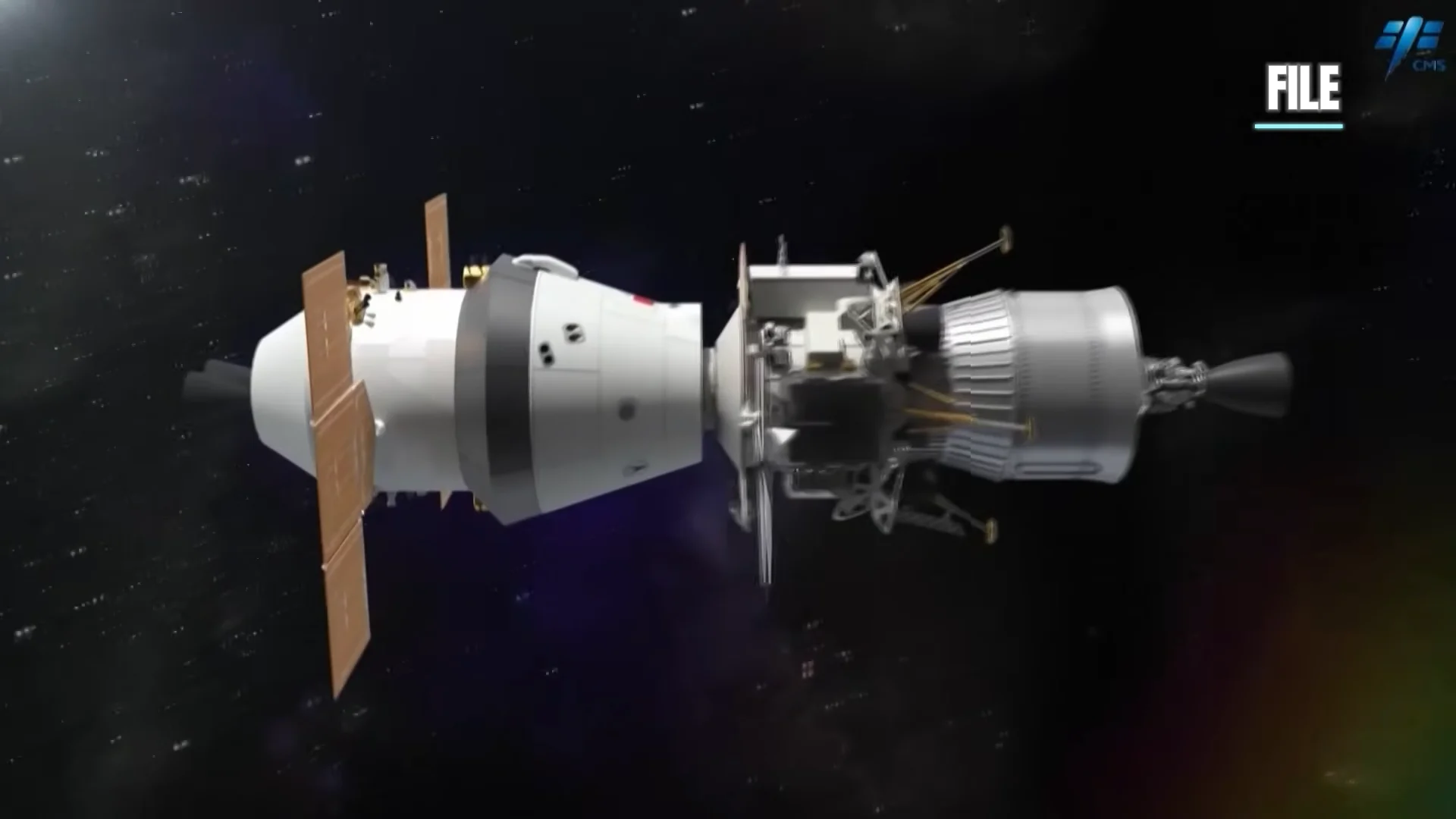
Wang Xiang, deputy chief designer of China's crewed space program, announced plans for a crewed lunar landing during the 7th Manned Space Symposium at Beihang University in Beijing on November 3rd. The mission will use two launches of the Long March 10 rocket to send the Lanyue lunar lander and Mengzhou crewed spaceship to the Moon. The two vehicles will rendezvous in orbit, where two of the three taikonaut crew will transfer to the lander and descend to the surface.
China plans to place the Mengzhou in both near-Earth and lunar configurations. The Long March 10A, a single-stick variant with two stages, will launch the near-Earth version for Tiangong space station missions. The lunar variant, a three-stage rocket with boosters, carries a payload capacity of 27 metric tons and will launch the lunar Mengzhou and Lanyue.
The program follows a phased approach. China will conduct uncrewed validation tests of all major systems before attempting crewed flight. The Lanyue lander completed a tethered test simulating descent and engine shutdown. The Mengzhou spacecraft completed zero-height abort and maximum dynamic pressure escape tests in June 2025. The Long March 10 completed a low-altitude demonstration and validation test this year.
Wang stated: "We will use the near-Earth version of the Long March 10 to launch the near-Earth version of the Mengzhou spacecraft to perform space station missions in Low-Earth Orbit, validating the rocket's basic technologies and the critical re-entry and return phases of the spacecraft. Then we will use the lunar version of the Long March 10 to launch the lunar version of the Mengzhou spacecraft to execute the lunar landing mission."
China aims to complete a crewed lunar mission by 2030. Beyond this, the country plans to construct an International Lunar Research Station beginning in 2031 using the Long March 9 super heavy-lift rocket.