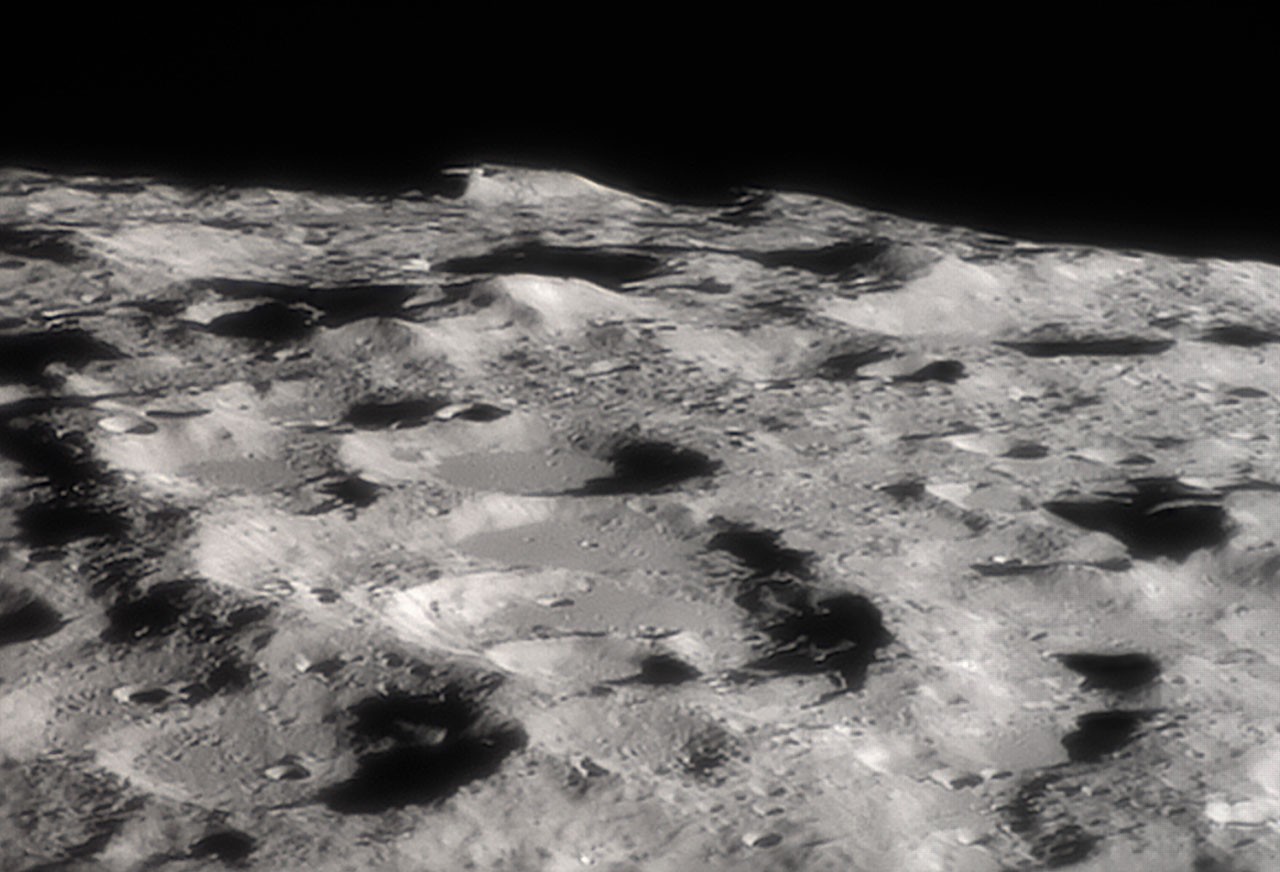
De Gerlache-Kocher massif rises about 4 kilometers above its surroundings near the lunar south pole. The mountainous formation appears in a close-up telescopic image captured on October 31 during a favorable libration angle, or lunar wobble, that enhanced the oblique view across the Moon's south pole.
The south polar region holds permanently shadowed crater floors that likely contain water ice deposits and peaks that receive nearly continuous sunlight. These features make it a prime location for the first human settlement on the Moon. De Gerlache-Kocher massif itself has been considered as a potential landing site for future crewed Artemis missions.