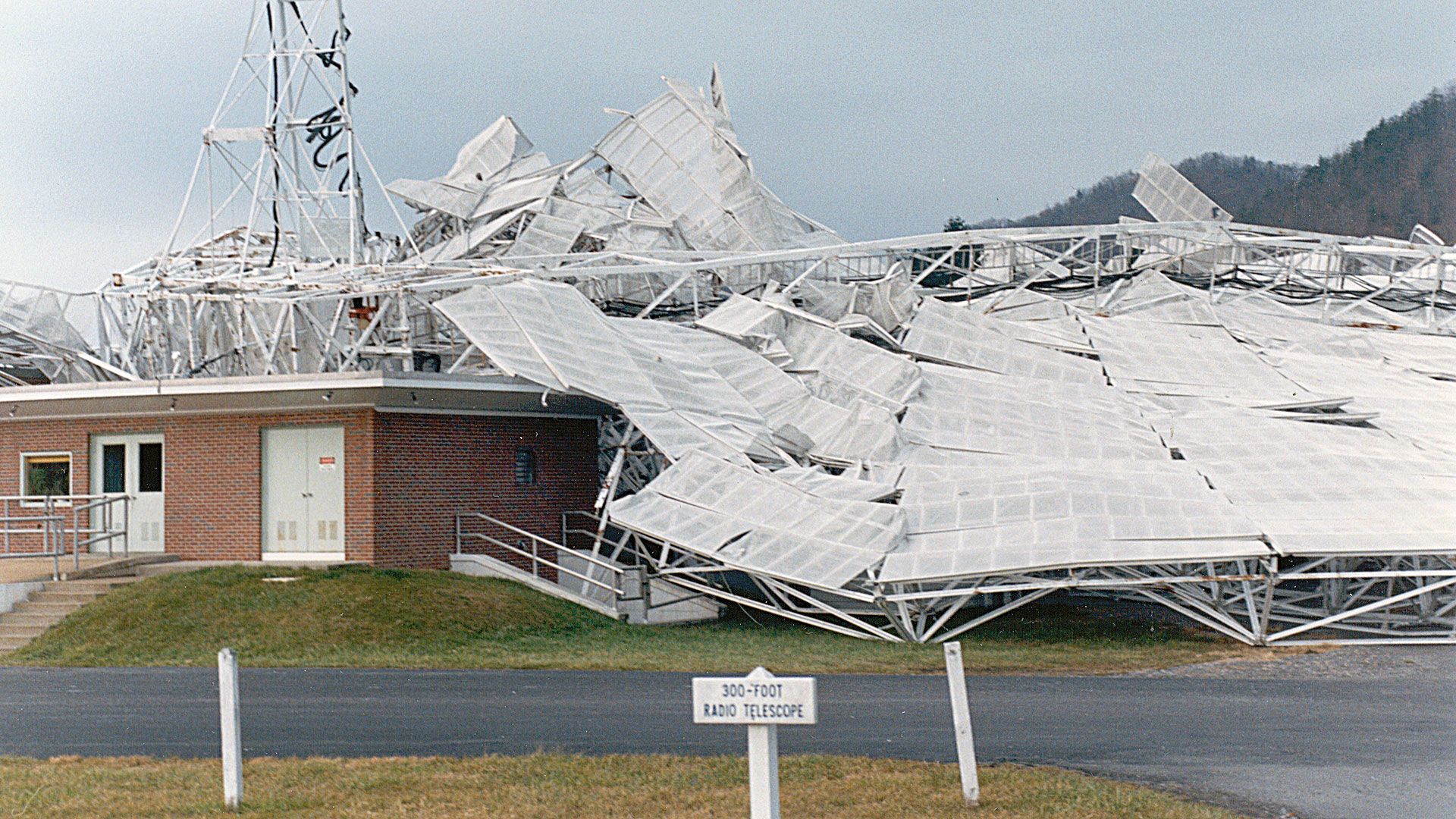
The 300-foot radio telescope in Green Bank, West Virginia collapsed on November 15, 1988, at 9:46 p.m. on a clear night with no strong winds. Observatory staff discovered a massive pile of wreckage the next morning.
A key structural element called a gusset plate failed under the telescope's weight. This connecting plate was one of four that held the telescope's large metal beams together. Investigators determined the gusset plates were not built to withstand the 26 years the telescope had been in operation.
The National Radio Astronomy Observatory noted that unforeseeable stress factors cracked the steel connector plate. The collapse was not attributed to human error.
During its operational years, the 300-foot telescope contributed to discoveries of dark matter and confirmed that pulsars come from supernova explosions. The observatory also produced the Green Bank 6cm Survey, an all-sky catalog of radio objects. "Nearly every northern hemisphere radio object studied by any other telescope is from a catalog compiled using this telescope," according to the NRAO.
Three years after the collapse, construction began on a replacement. The Green Bank Telescope, which was larger and more sensitive than its predecessor, began science operations in 2001.