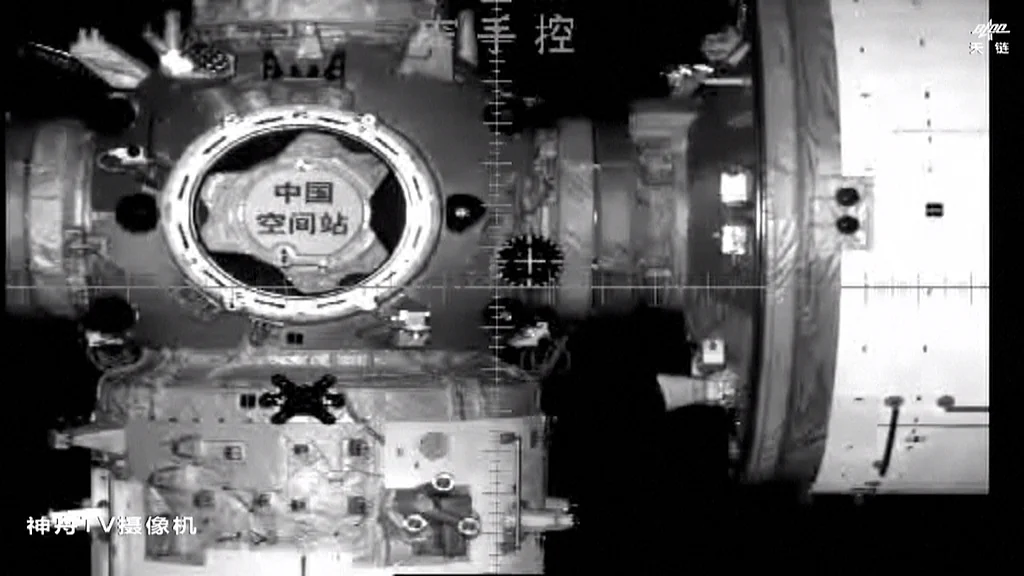
When Muhammad Zeeshan Ali or Khurram Daud launches aboard Shenzhou 24 on November 25th, 2026, they will make history as the first foreign astronaut to visit China's Tiangong space station. This moment matters far beyond the symbolic achievement of sending Pakistan's first astronaut to space. It represents something the international space community desperately needs: proof that competing space powers can collaborate meaningfully, even as geopolitical tensions simmer elsewhere.
The agreement signed in February 2025 between China and Pakistan laid the groundwork for this partnership, culminating in the selection of Ali and Daud through rigorous preliminary screenings, secondary evaluations, and final selection completed in April 2026. One will travel to Tiangong as a payload specialist for a week-long mission aboard Shenzhou 23, while the other serves as backup. It is a straightforward arrangement that accomplishes something remarkable: it gives Pakistan a seat at the table of spacefaring nations while demonstrating China's willingness to open its doors.
The timing is particularly significant. Pakistan will edge out India by close to a year—India's Gaganyaan program is not expected to launch its first crewed mission before Q2 2027. For India and Pakistan, this represents another arena where space capability translates into national prestige. But the larger story is about China's evolution. This is the country's 18th crewed spaceflight, and for the first time, it will carry an international crew member aboard its Tianhe core module aboard a Long March 2F rocket.
China's approach to space cooperation has historically differed from NASA and the European Space Agency, which regularly welcome international partners. That gap is closing. This mission aligns with China's lunar ambitions and the eventual creation of the International Lunar Research Station. By bringing Pakistan into the fold now, China is building relationships that could prove essential for the next phase of space exploration.
There is a lesson here for all space-faring nations: the cosmos is vast enough for competition and cooperation to coexist. The secrecy around crew names—announced only the day before launch except for the Pakistani astronaut—should not obscure what is genuinely happening. Two nations are choosing partnership over isolation. As geopolitical divisions deepen on Earth, the fact that space stations can still host astronauts from different countries should remind us that cooperation remains possible. China's decision to share Tiangong with a Pakistani colleague sets a precedent worth following.