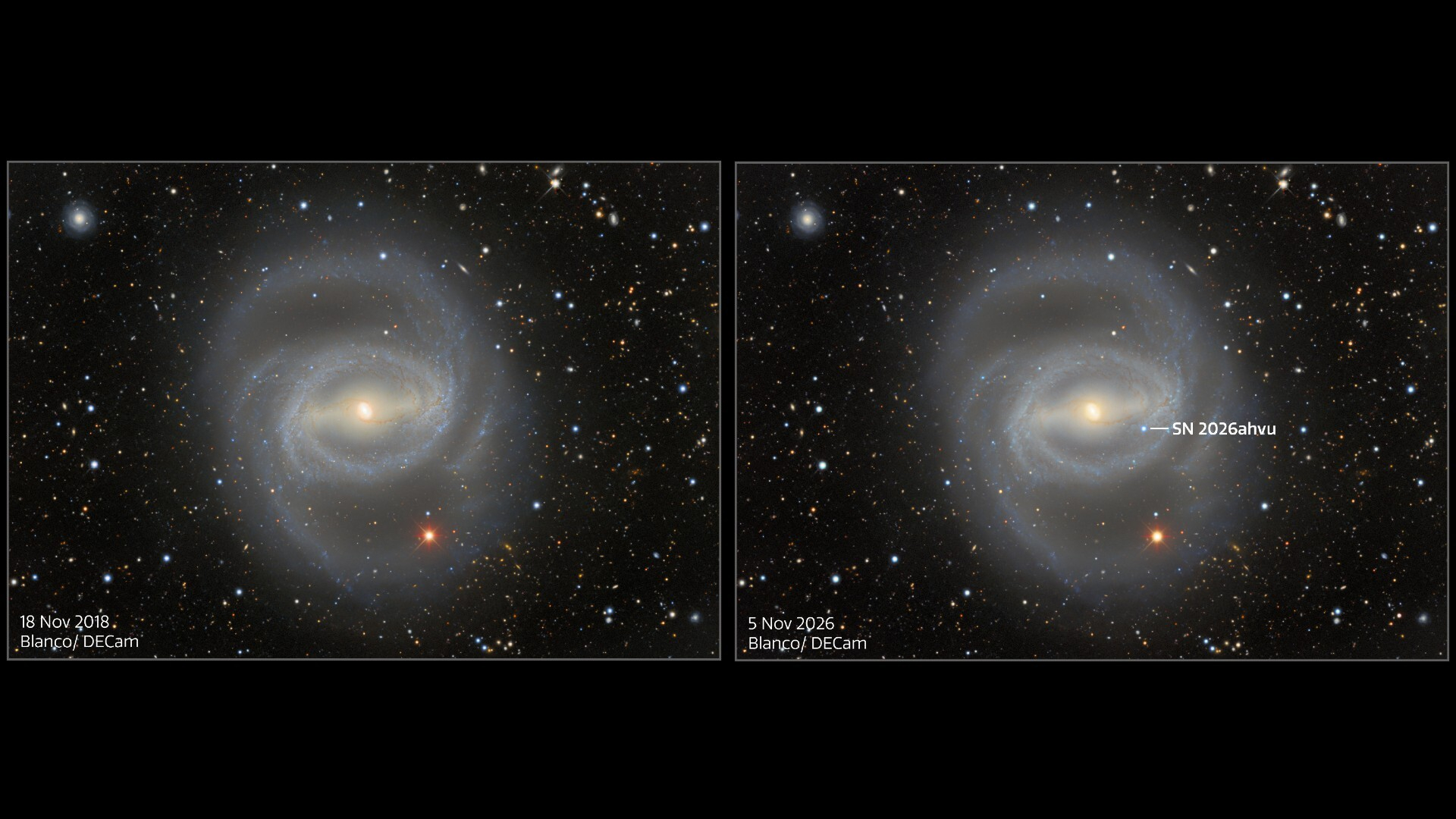
A new Type Ia supernova called SN 2026ahvu erupted in the spiral galaxy NGC 1433, located about 50 million light-years from Earth. The ATLAS robotic survey, designed to detect near-Earth asteroids, captured the explosion.
What makes this supernova exceptional is its early detection. Observations from when the supernova was first spotted and in follow-up studies showed it was growing brighter, indicating the explosion was caught in its initial stages. Most Type Ia supernovae in binary systems occur when a white dwarf pulls material from a companion star until enough accumulates on its surface to trigger an explosion. By observing this event before, during, and after the explosion, researchers can study how the supernova affected its binary system.
Following ATLAS's discovery, NOIRLab's Dark Energy Camera and Gemini South telescope provided additional observations.