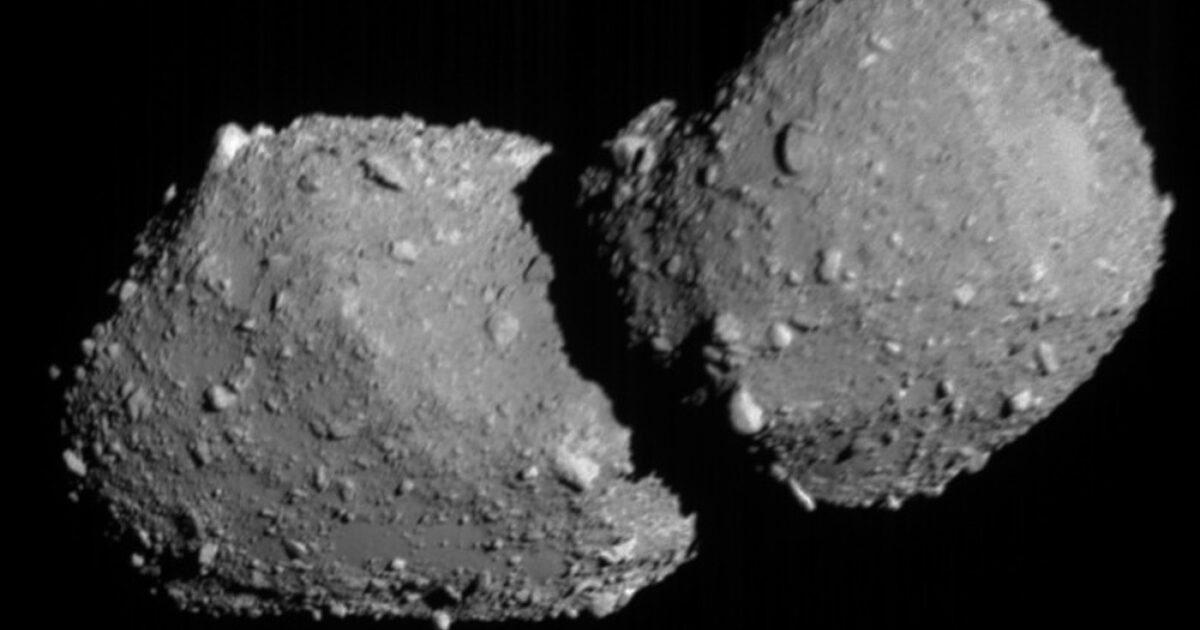
Japan's Hayabusa2 spacecraft executed a close approach to asteroid Torifune on July 5, marking another chapter in the probe's extended mission beyond its original targets. The Japan Aerospace Exploration Agency (JAXA) spacecraft, which originally traveled to asteroid Ryugu and returned samples to Earth in December 2020, continues to operate and conduct observations across the inner solar system.
Hayabusa2's original mission was a resounding success. The probe rendezvoused with the near-Earth asteroid Ryugu in 2018, collected subsurface samples through direct contact and explosive collection methods, and delivered 5.4 grams of pristine asteroid material to Earth. The samples revealed evidence of water-altered minerals and organic compounds, providing direct insight into the chemical building blocks of the early solar system and potential prebiotic chemistry.
After sample return, JAXA extended Hayabusa2's operational life. The spacecraft retained sufficient fuel and functional instruments to continue scientific work. The agency redesignated this continuation as the Extended Mission, tasking the probe with flybys of multiple near-Earth asteroids. These encounters allow scientists to gather spectroscopic and imaging data from multiple targets, expanding humanity's catalog of asteroid compositions and physical characteristics without the resource intensity of dedicated sample-return missions.
Asteroid Torifune represents one such encounter. These close approaches provide astronomers with detailed views of asteroid surfaces, rotation periods, shapes, and reflective properties across visible and infrared wavelengths. Hayabusa2's cameras and spectrometers can resolve surface features and detect compositional variations that ground-based telescopes cannot match. The data informs models of asteroid formation, evolution, and the distribution of different mineralogical types across the solar system.
Extended missions like Hayabusa2's demonstrate the cost-efficiency of repurposing spacecraft after primary objectives conclude. Rather than decommissioning the probe, JAXA leveraged its remaining capabilities to conduct follow-on science. This approach yields dividends for planetary science while managing budgets effectively. The accumulated data from multiple asteroid flybys enriches the broader survey of near-Earth object populations, supporting hazard assessments and advancing human understanding of solar system dynamics.
Hayabusa2 joins other long-lived space probes that have far exceeded their original mission timelines. NASA's New Horizons spacecraft, launched in 2006, continues transmitting data from the Kuiper Belt. JAXA's Akatsuki orbiter, originally intended for a four-year Venus mission, has operated for over a decade. These extended operations reflect both spacecraft engineering quality and the scientific opportunities available when initial objectives complete successfully.
The Torifune flyby occurred as Hayabusa2 continues its trajectory through near-Earth space. Subsequent encounters may follow depending on fuel reserves, spacecraft health, and trajectory opportunities. Each observation strengthens the scientific foundation for asteroid research and informs future sample-return missions planned by space agencies worldwide, including NASA's OSIRIS-REx and potential follow-up missions to diverse asteroid types.